


For organic cashew exporters and buyers alike, a new compliance deadline is fast approaching. Starting January 2027, the European Union will enforce maximum permitted limits for Mineral Oil Aromatic Hydrocarbons (MOAH) in tree nuts — including cashew — marking a significant shift in food safety regulation.
But what exactly are MOSH and MOAH? Where do they come from, and what impacts do they have on human health that have recently drawn significant attention from the food industry? How do they end up in cashew products, and what does this mean for the supply chain? This article breaks it all down.

Food safety is always a top priority in the modern food industry. Recently, MOSH and MOAH—compounds derived from mineral oil—have become a major concern due to their potential to enter food during processing, packaging, and transportation.
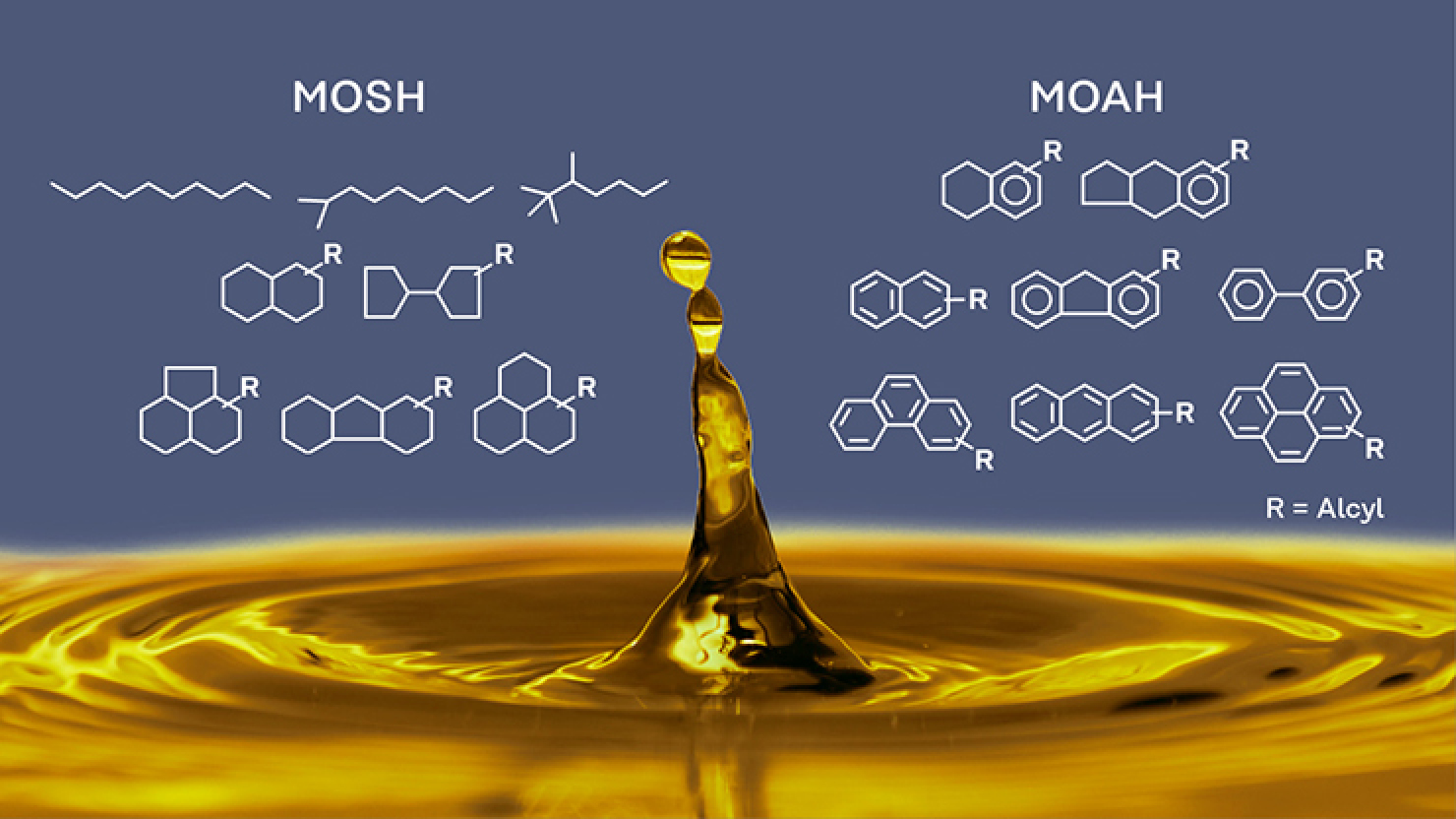
Mineral oil hydrocarbons (MOH) comprise a wide range of chemical compounds obtained mainly from petroleum distillation and refining. They are categorised into two main groups referred to as MOSH (Mineral Oil Saturated Hydrocarbons) and MOAH (Mineral Oil Aromatic Hydrocarbons).
MOSH consists of linear and branched alkanes, and alkyl-substituted cyclo-alkanes, whilst MOSH includes mainly alkyl-substituted polyaromatic hydrocarbons.
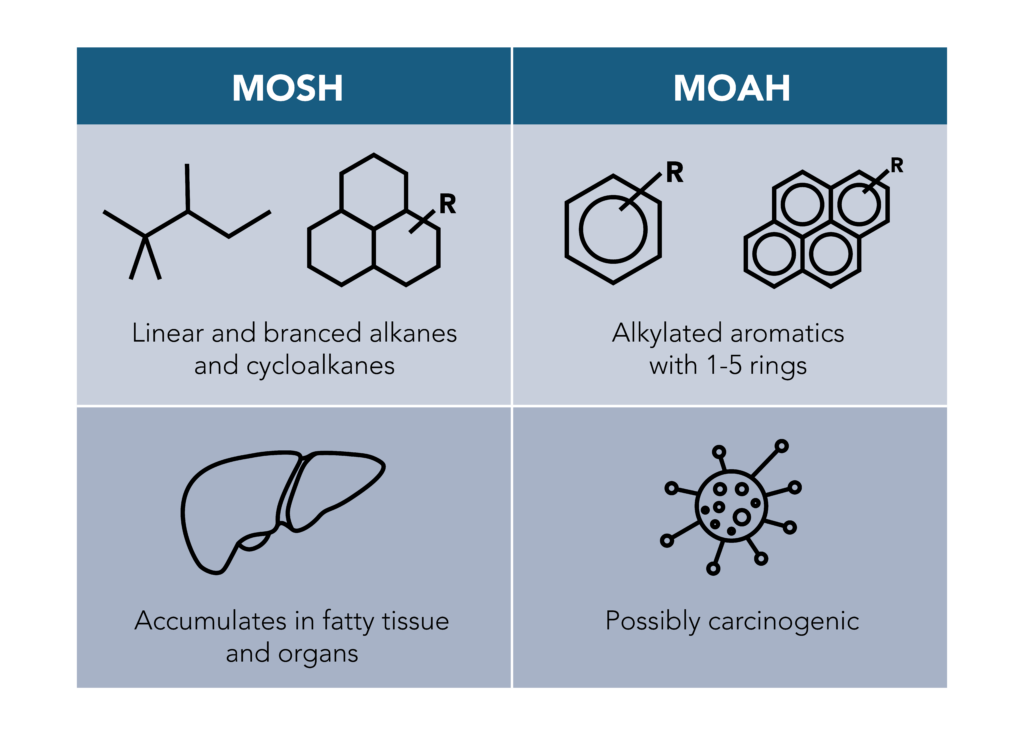
The potential human health impact of MOH varies widely. MOAH with 3- or more aromatic rings may be associated with genotoxicity and carcinogenicity (they can damage DNA, the genetic material of cells, and may cause cancer), while MOSH may accumulate in various organs, but the present dietary exposure to MOSH does not raise concern for human health, for all age classes.
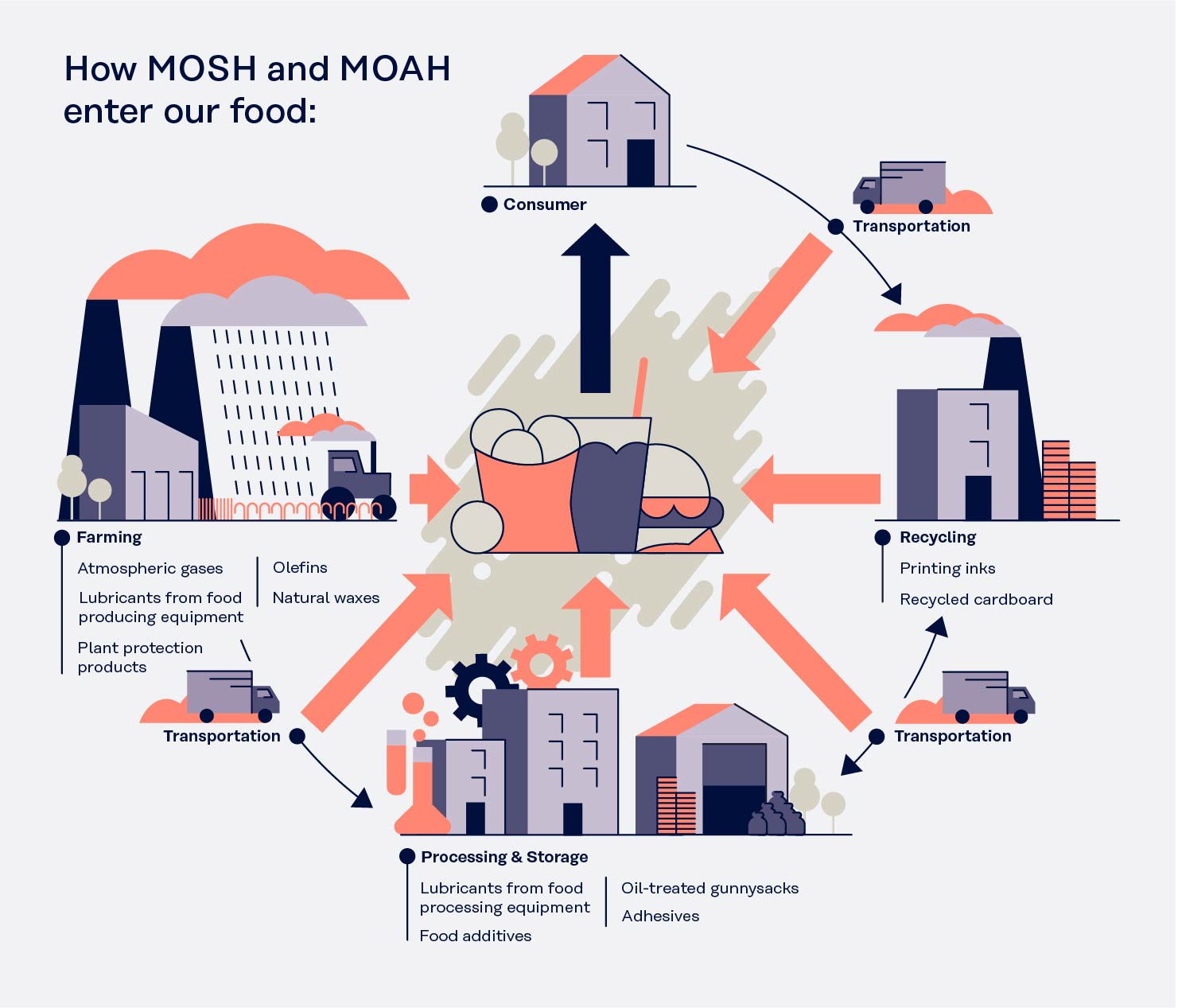
(MOSH and MOAH can enter our food in each step of the processing and production chain.)
MOSH and MOAH can enter food at virtually every step of the processing and production chain. The main sources of contamination include:
- Printing inks and recycled cardboard packaging
- Lubricants from food-producing equipment (machine oils, hydraulic oils)
- Atmospheric exposure during processing
In cashew processing specifically, MOSH and MOAH may originate from oils used to clean machinery, such as during the cracking stage, testa peeling, and lubricants used in air compressors. In addition, they may also come from packaging materials that contain MOSH and MOAH, leading to potential cross-contamination in cashew products.
To date, there are currently no MRLs in food at the European and national level. According to the current evaluation by representatives of the food control authorities of the federal states and the organization of Food Federation Germany (Lebensmittelverband Deutschland), the following benchmark levels have been published for mineral oil hydrocarbons in nuts, oilseeds, coconuts, peanuts and dried fruits (benchmark levels for mineral oil hydrocarbons (MOH) in food, September 2022):
- MOSH (C10-C50): 4 mg/kg
- MOAH (C10-C50): not quantifiable (max. limit of quantification: 1 mg/kg for products with a fat content >4 %)
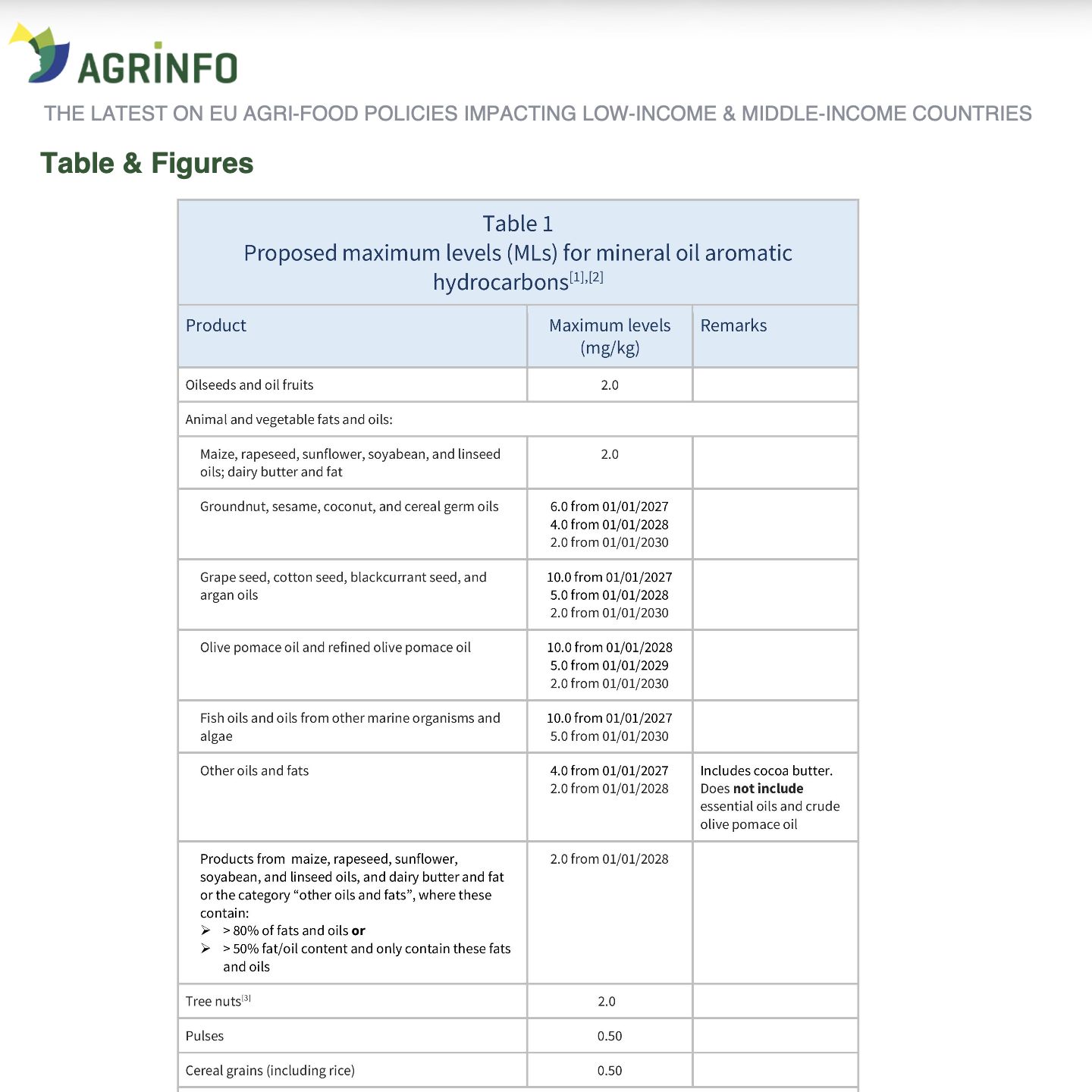
After a long period of risk assessment on human health and based on the collected data on MOAH and MOSH, the food safety authorities of the European Union have notified the World Trade Organization under the Sanitary and Phytosanitary Measures of their intention to set maximum permitted limits (maximum levels) for mineral oil aromatic hydrocarbons (MOAH) in certain foods, which will apply from 1 January 2027.
According to Committee (G/SPS/N/EU/930) the proposed maximum residue limits (MRLs) for MOAH (C10–C50) in tree nuts—including almonds, Brazil nuts, cashew nuts, chestnuts, coconuts, hazelnuts, macadamias, pecans, pine kernels, pistachios, and walnuts—are: 2.0 mg/kg
And for other food categories, as shown in the table below:
At Target Agriculture Vietnam, managing MOSH and MOAH contamination has been a core part of our quality assurance framework since 2019 — well ahead of the upcoming EU regulatory deadline.
We strictly control the entire supply chain, from farm to customer. All product lots are tested to ensure compliance with the guidelines of the food control authorities of the federal states and the Food Federation Germany before being delivered to customers.
Target Agriculture Group is a leading producer and exporter of organic cashew nuts, pioneering in the control of MOSH and MOAH. We are committed to ensuring that all cashew lots are consistently of high quality, great taste, and safe for consumer health. We continuously update and apply the latest regulatory requirements and control standards.
Reference information as below:
https://efsa.onlinelibrary.wiley.com/doi/epdf/10.2903/j.efsa.2012.2704
https://www.packaging.kuraray.eu/blog/mosh-moah/
https://www.efsa.europa.eu/en/topics/topic/mineral-oil-hydrocarbons
https://agrinfo.eu/book-of-reports/mineral-oil-hydrocarbons-and-food/
 YOUTUBE - LINKEDIN