


Mycotoxin contamination can get shipments rejected at customs. See the risks and how a trusted Vietnam cashew supplier controls them.
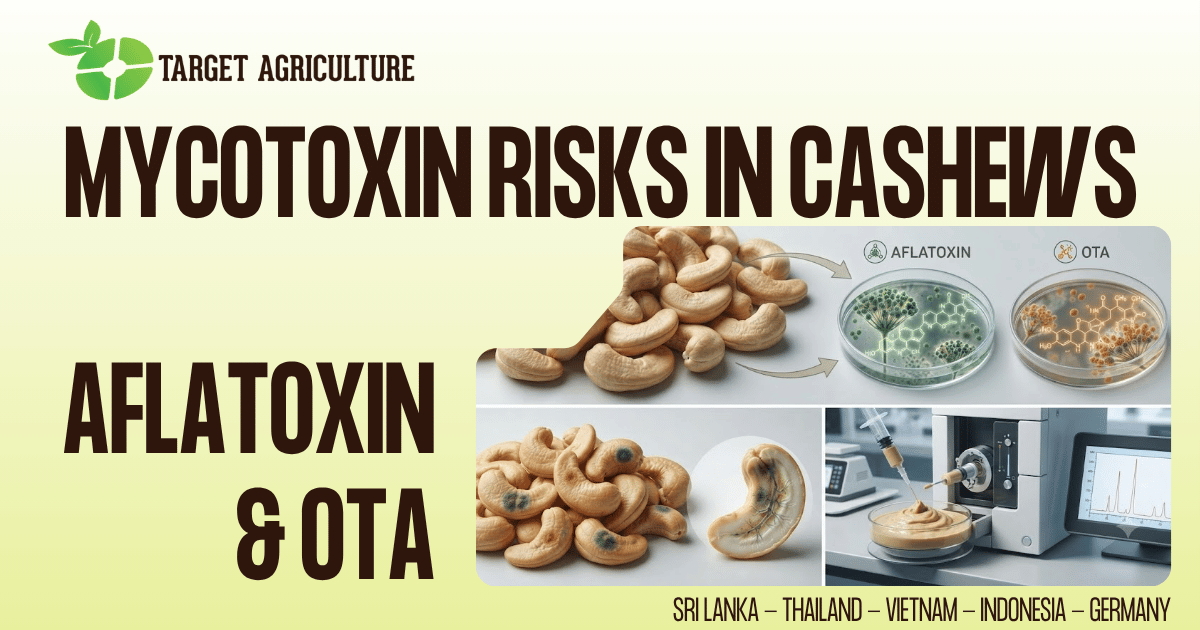
As global consumer demand for raw and plant-based foods expands, cashew nuts remain a cornerstone product for international food manufacturers and retail brands. However, operating within strict global markets requires navigating critical food safety risks. Among these, mycotoxins—specifically Aflatoxins and Ochratoxin A (OTA)—represent one of the highest regulatory and commercial liabilities for international buyers.
Understanding how mycotoxins form, keeping up with changing global residue thresholds, and choosing compliant processing partners are vital steps to protecting your brand’s supply chain.
Mycotoxins are toxic secondary metabolites produced naturally by certain fungal species under specific environmental conditions. In cashew kernels, the primary organisms of concern belong to the Aspergillus family:
- Aflatoxins (, , , ): Produced mainly by Aspergillus flavus and Aspergillus parasiticus. Aflatoxin is classified as a Group 1 human carcinogen by the International Agency for Research on Cancer (IARC).
- Ochratoxin A (OTA): Produced primarily by Aspergillus niger and Penicillium species during storage in high-humidity environments.
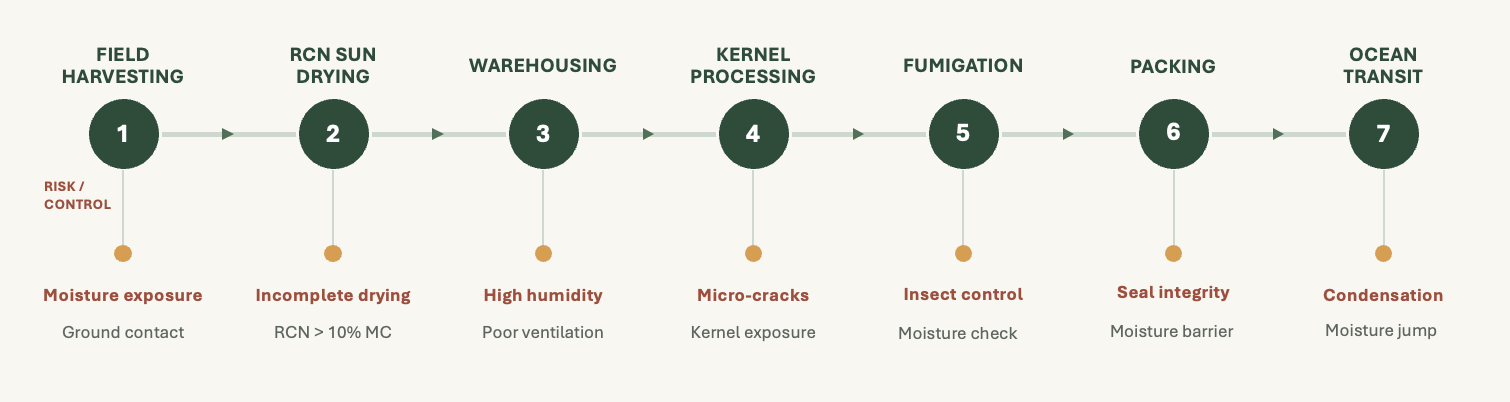
Cashews become vulnerable to mold growth at key points along the post-harvest chain: prolonged ground contact during harvesting, improper raw cashew nut (RCN) drying, or moisture re-absorption during ocean transit. When kernel moisture rises above , mold spores proliferate, releasing heat-stable toxins that cannot be destroyed by standard roasting or high-temperature processing.

International border controls rigorously test imported nut shipments for mycotoxin levels. Failing a customs mycotoxin screen leads directly to cargo destruction, forced re-export, or permanent flagging on import alert systems.
Maximum residue limits (MRLs) vary significantly across major importing regions:
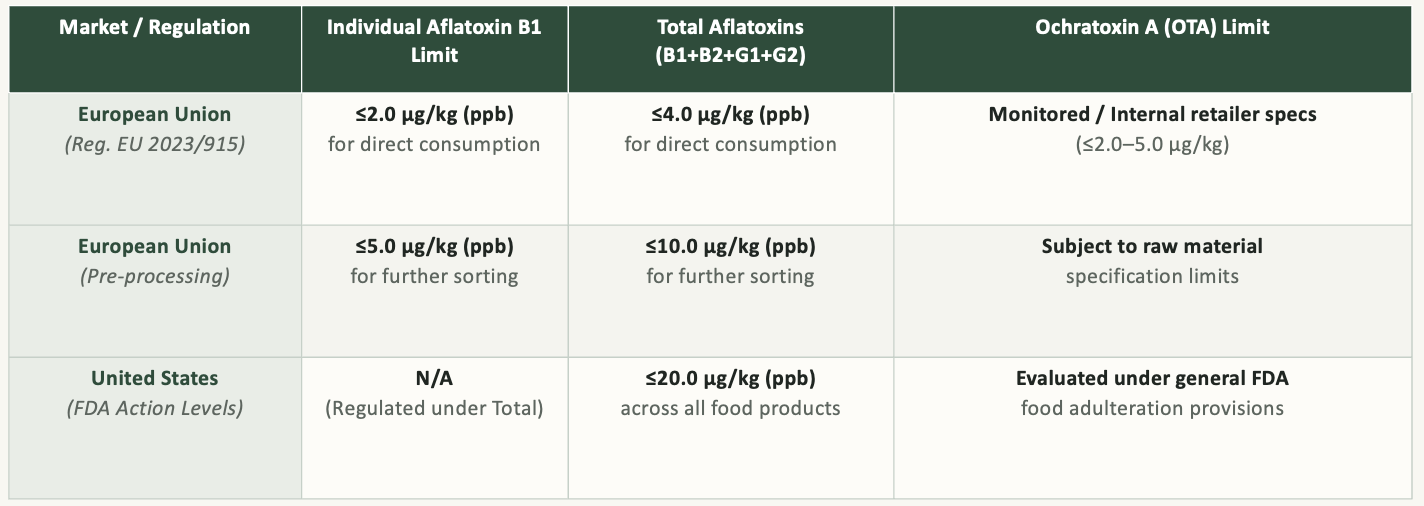
Because European Union authorities enforce a strict total aflatoxin cap of , cashew exporters supplying European buyers must maintain far tighter quality controls than those catering solely to regional markets.
Controlling mycotoxin risks requires an integrated Hazard Analysis Critical Control Point (HACCP) strategy that begins at the farm level and continues through to final packaging:
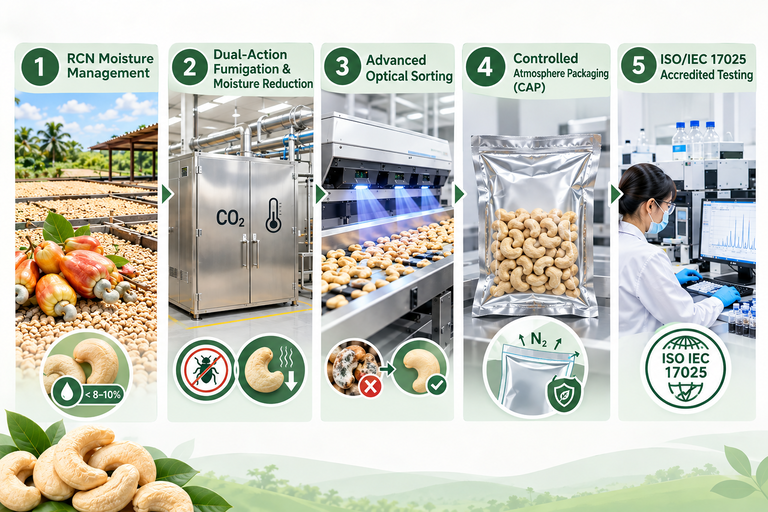
1. RCN Moisture Management: Raw cashew nuts must be dried immediately after harvesting until internal kernel moisture drops below before long-term storage.
2. Dual-Action Fumigation & Moisture Reduction: Insect damage creates physical entry wounds on kernels that accelerate fungal colonization. Utilizing specialized chemical-free fumigation systems—such as controlled thermal conditioning combined with high-pressure —serves a vital dual purpose: it completely eradicates all stages of insect pests and larvae while simultaneously driving internal kernel moisture down below . Reaching this low moisture threshold deprives mold spores of the water activity needed to grow or produce mycotoxins.
3. Advanced Optical Sorting: Moldy, discolored, or insect-damaged kernels—which carry the highest concentration of mycotoxins—are removed using high-resolution color sorters and UV fluorescence sorting technology.
4. Controlled Atmosphere Packaging (CAP): Vacuum-sealing kernels in high-barrier vacuum bags with nitrogen flushing prevents moisture migration and inhibits aerobic fungal growth during long-distance shipping.
5. ISO/IEC 17025 Accredited Testing: Every commercial lot must be verified prior to export using High-Performance Liquid Chromatography (HPLC) or LC-MS/MS testing methods.
As a premier Vietnam cashew nuts supplier and trusted organic cashew exporter Vietnam, Target Agriculture Group mitigates mycotoxin liabilities through strict, end-to-end processing controls.
Operating under GFSI-recognized manufacturing benchmarks—BRCGS—our processing facilities combine sustainable sourcing in Binh Phuoc with state-of-the-art optical sorting technology and automated vacuum-packing lines. Every production batch undergoes comprehensive pre-shipment laboratory analysis to ensure full compliance with EU Regulation 2023/915 and FDA requirements.
Ensure your shipments pass customs smoothly every time. Contact Target Agriculture Group today to request sample kits, detailed specifications, and full Certificate of Analysis (CoA) documentation for your next shipment.
 YOUTUBE - LINKEDIN