


Cashews are no longer just a commodity. Vietnam’s growing value ecosystem connects organic farming, processing, OEM, and by-product utilization to create greater value from farm to global market.
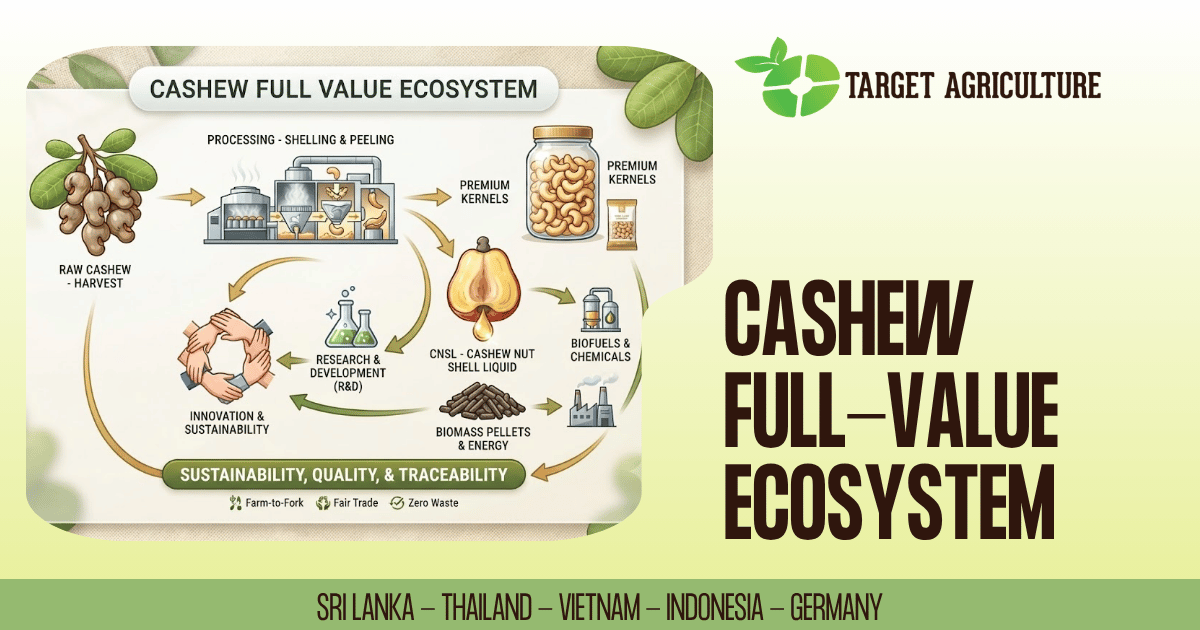
For decades, cashews have been traded primarily as an agricultural commodity: raw nuts enter processing facilities, kernels are exported, and value is often measured by volume. But the modern cashew industry is moving toward a broader model — one where farming, processing, product development, packaging, and by-product utilization all contribute to value creation.
For Target Agriculture, this shift reflects how the Vietnamese cashew supply chain is evolving from a commodity business into a more integrated food and agricultural ecosystem.
Value creation begins long before cashew kernels reach a retail shelf.
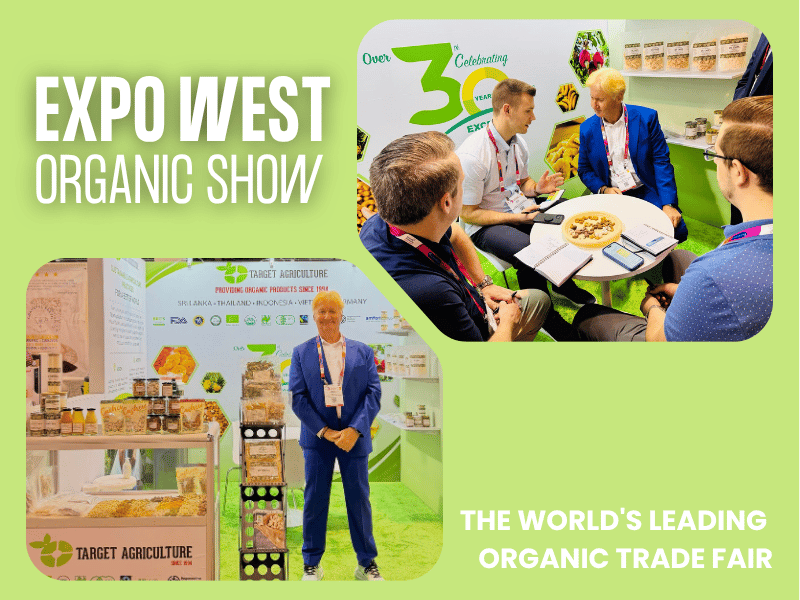
In Binh Phuoc, one of Vietnam’s important cashew-growing regions, Target Agriculture works with organic farming communities and operates processing activities close to the production area. This proximity supports coordination between farmers, cooperatives, local stakeholders, and processing operations while strengthening traceability throughout the supply chain.
The result is more than a supply of raw material. It creates a connection between organic agriculture, controlled processing, food safety, certification, and international market requirements.
That connection is increasingly important for buyers looking beyond simple commodity sourcing.
Learn more about Target Agriculture’s organic cashew sourcing and processing operations in Vietnam, where the company works closely with farming communities and processing facilities.
The cashew kernel remains the core commercial product, serving food manufacturers, ingredient buyers, snack companies, and retailers. Target Agriculture supplies organic cashew kernels in different grades, including W240, W320, W450, LWP, and LP, alongside roasted and flavored products.
But processing can create significantly more value than simply preparing kernels for bulk export.
Roasting, seasoning, grading, product development, and retail packaging allow cashews to move into different applications and consumer formats. Target Agriculture's Vietnam operations therefore connect agricultural sourcing with food processing and finished-product development.
This is particularly relevant to international brands seeking organic cashew OEM and private-label solutions rather than raw ingredients alone.
One of the clearest examples of value addition is the development of retail-ready cashew products.
Through Tamkira, Target Agriculture's dedicated packaging operation in Vietnam, the group can support private-label products in small-pack formats, including customized packaging and nitrogen-flush technology designed to protect freshness during storage and transportation.
This changes the commercial equation.
Instead of exporting only bulk kernels, a supply chain can potentially capture additional value through processing, packaging, branding support, and product customization before the product reaches an international retail shelf.
For B2B buyers, this creates an opportunity to consolidate sourcing and manufacturing requirements with an experienced organic cashew partner.
The full-value concept also extends beyond the edible kernel.
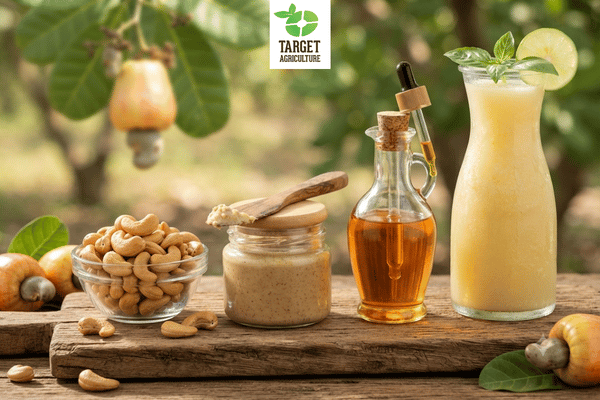
The cashew shell contains Cashew Nut Shell Liquid (CNSL), a valuable industrial raw material used in applications such as resins, coatings, friction materials, polymers, and bio-based chemicals. Cashew shells can also be repurposed as industrial fuel or used in applications such as biochar and compost, helping processors reduce waste while creating additional value from the processing stream.
Another opportunity lies in the cashew apple, the fleshy fruit attached to the cashew nut. Often overlooked in conventional cashew processing, the cashew apple is rich in Vitamin C and has potential for a range of food and beverage applications.
It can be processed into cashew apple juice, while further processing can support fermented beverages and other drink products. In some producing regions, cashew apples are also explored for alcoholic beverages. Turning this part of the crop into marketable products could help reduce agricultural losses while opening additional opportunities for farmers, processors, and food manufacturers.
For the wider cashew industry, this represents an important shift in perspective. Instead of focusing exclusively on the kernel, producers can explore how different parts of the crop can serve different markets — from food and beverages to industrial materials and renewable applications.
For Target Agriculture, this broader perspective aligns with the development of a more responsible and integrated supply chain in Vietnam, where organic farming, controlled processing, value-added products, and more efficient resource utilization can work together.
The goal is not simply to process more cashews, but to create more value from the crop while reducing unnecessary waste.
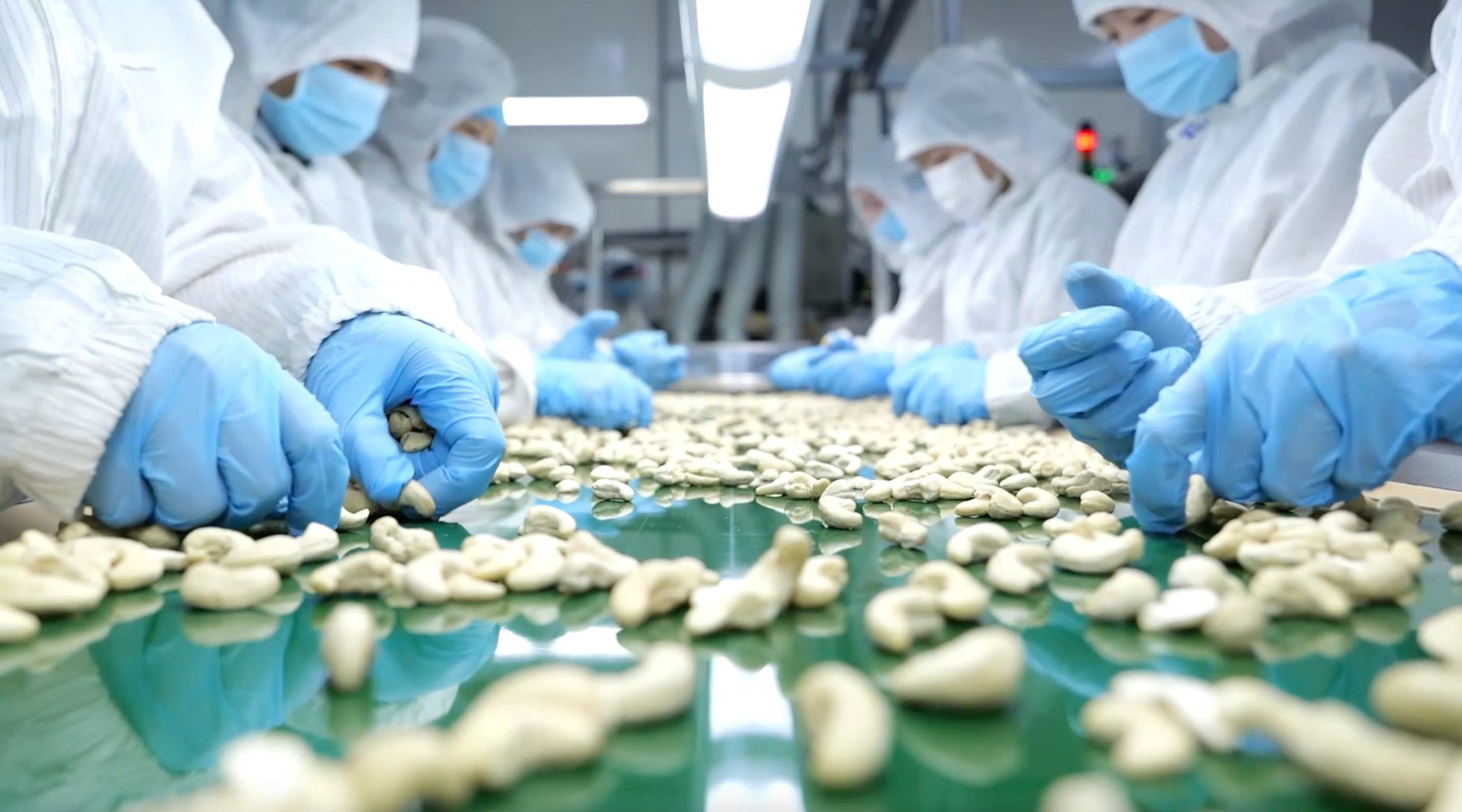
The future of the cashew industry is not necessarily about producing more raw material. It is increasingly about creating more value from what is already produced.
For Target Agriculture, that means connecting certified organic farming with controlled processing, product development, OEM packaging, traceability, and more responsible resource utilization.
From Binh Phuoc's organic farms to finished products prepared for international markets, the cashew supply chain can become more than a commodity route. It can become an integrated ecosystem where farmers, processors, manufacturers, brands, and consumers all participate in creating greater value.
Looking for a certified organic cashew supplier in Vietnam with bulk, processing, and OEM capabilities? Contact Target Agriculture to discuss your product and market requirements.
Source: Cashew Association of Cambodia (CAC), “Cashew Industry Seen as Full Value Ecosystem Beyond Raw Commodity,” March 29, 2026. Additional company-specific information: Target Agriculture.
 YOUTUBE - LINKEDIN