


The lowest price gets your attention. The wrong supplier gets your next six months — managing quality claims, supply disruptions, and conversations you did not plan to have.
In most procurement processes, price serves one purpose: shortlisting. What it does not reveal is whether a supplier can reproduce consistent quality across 10, 20, or 50 shipments. A supplier who ships on time but inconsistently can be just as damaging as one who ships late — and in cashew trade, inconsistency compounds faster than most buyers expect.
The global cashew market was valued at approximately USD 10.32 billion in 2025, attracting thousands of new exporters, brokers, and trading companies. While that creates abundant opportunities for buyers, it also introduces risks such as inconsistent quality, fraudulent suppliers, and unreliable shipping practices (Source: ExportersWorld, March 2026).
In a market this large and this fragmented, the lowest price is often the highest risk.
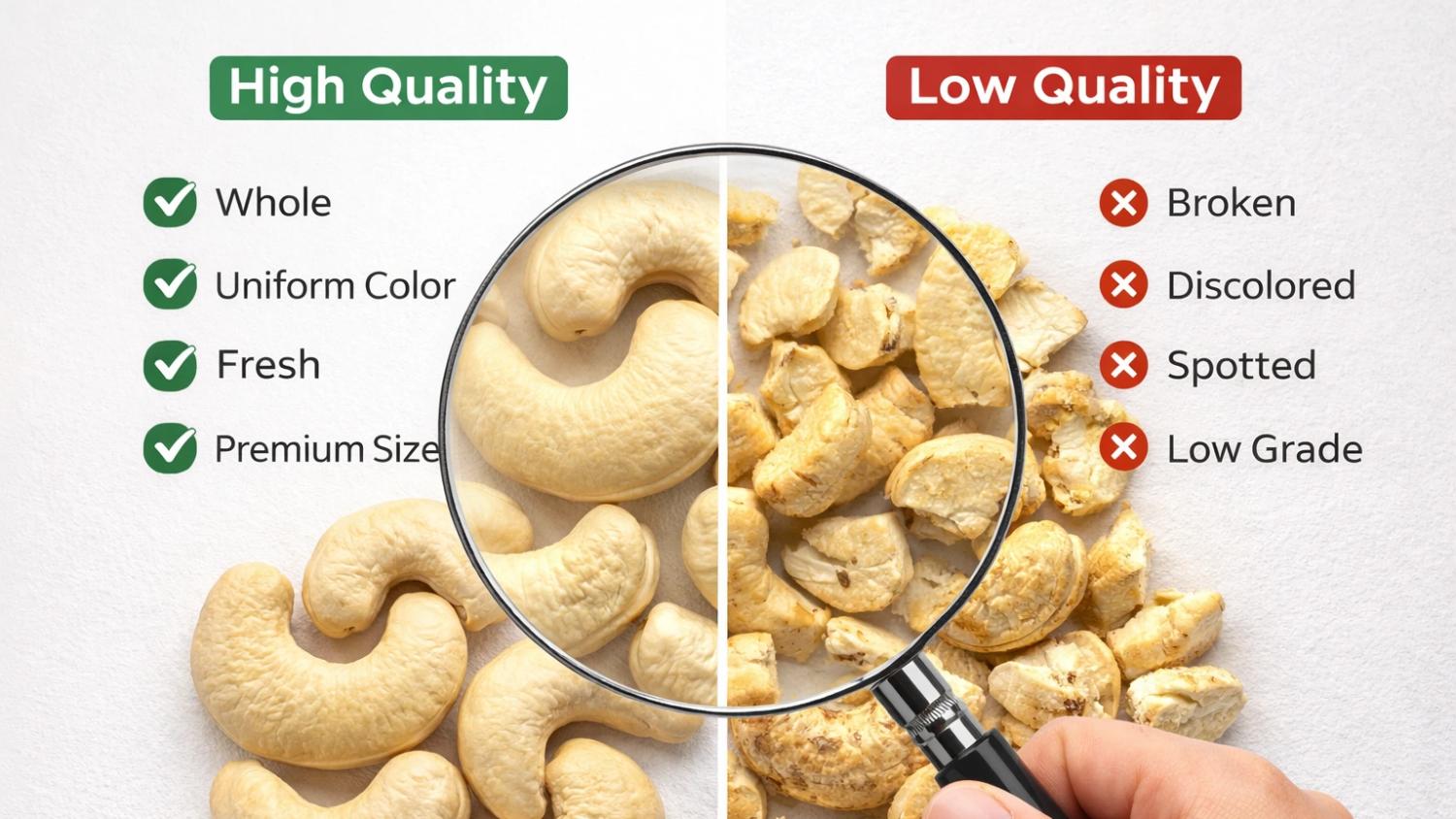
Quality inconsistency creates reformulation costs, failed internal audits, and product recalls — all tracing back to ingredient variability. Reputational damage follows: your customers do not see your supply chain. They see your product on shelves — or not. Stockouts and quality failures erode brand trust in ways that are difficult and expensive to rebuild (Source: Red River Foods, March 2026).
The financial exposure at a per-shipment level is substantial. Repeated supply chain disputes erode trust, making long-term commercial relationships harder to sustain. In more serious cases, disputes escalate to formal claims (Source: Clarifresh, March 2026).
For organic cashew buyers specifically, the risk has an additional dimension. Companies offering suspiciously low prices may be sourcing from non-organic or uncertified suppliers, potentially compromising the organic label's integrity. In 2019, a USD 142 million scheme involving fraudulent sale of non-organic grain as organic resulted in a federal prison sentence — the largest organic fraud case in US history (Source: Cashew Coast, December 2025). Organic fraud is documented. And the buyer whose label carries the claim carries the liability.
The strongest supplier relationships are built on suppliers who demonstrate: direct sourcing with better visibility and fewer points of failure; geographic diversification that protects against regional disruptions; certifications backed by verifiable systems — not just paperwork; and proactive communication before a potential issue becomes the buyer's problem (Source: Red River Foods, March 2026).
In practice, this means asking:
- Does kernel grade remain stable across production runs — or drift depending on raw material that week?
- Can the supplier demonstrate moisture levels below 5%, foreign matter below 0.5%, and consistent kernel grading across batches? (Source: ExportersWorld, 2026) target-agriculture
- Are transaction certificates and lot documentation available immediately — or assembled after the order is confirmed?
- Approximately 36% of global cashew processors are now adopting automated technologies to improve consistency. Does this supplier have the production infrastructure to match your volume requirements without compromising standards? (Source: ExportersWorld, 2026)
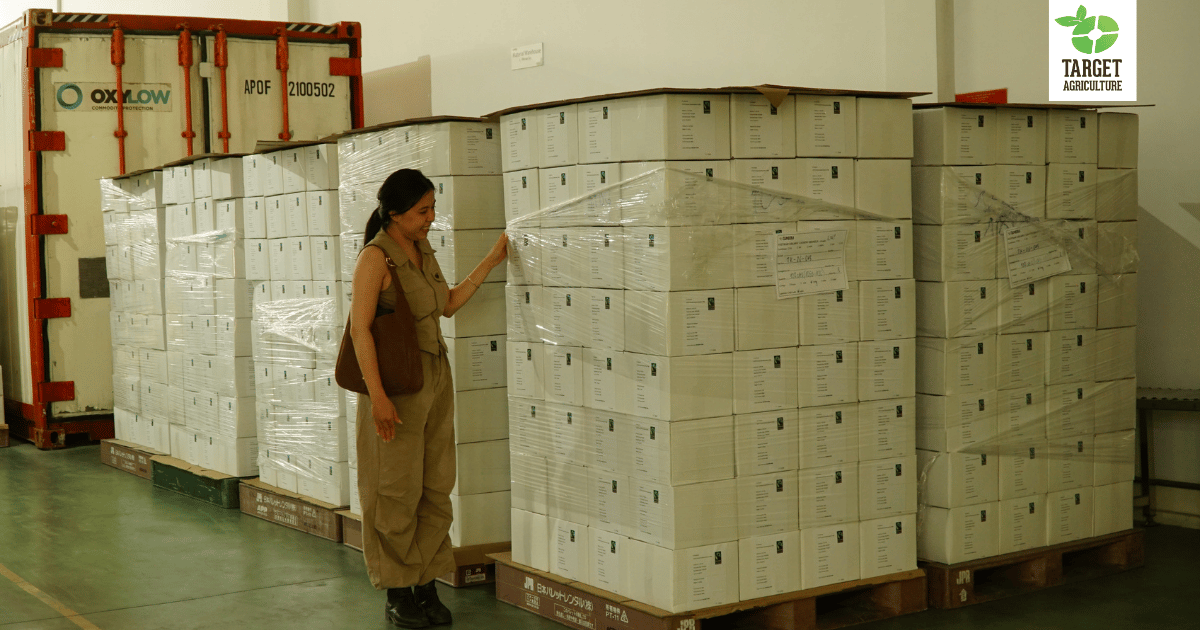
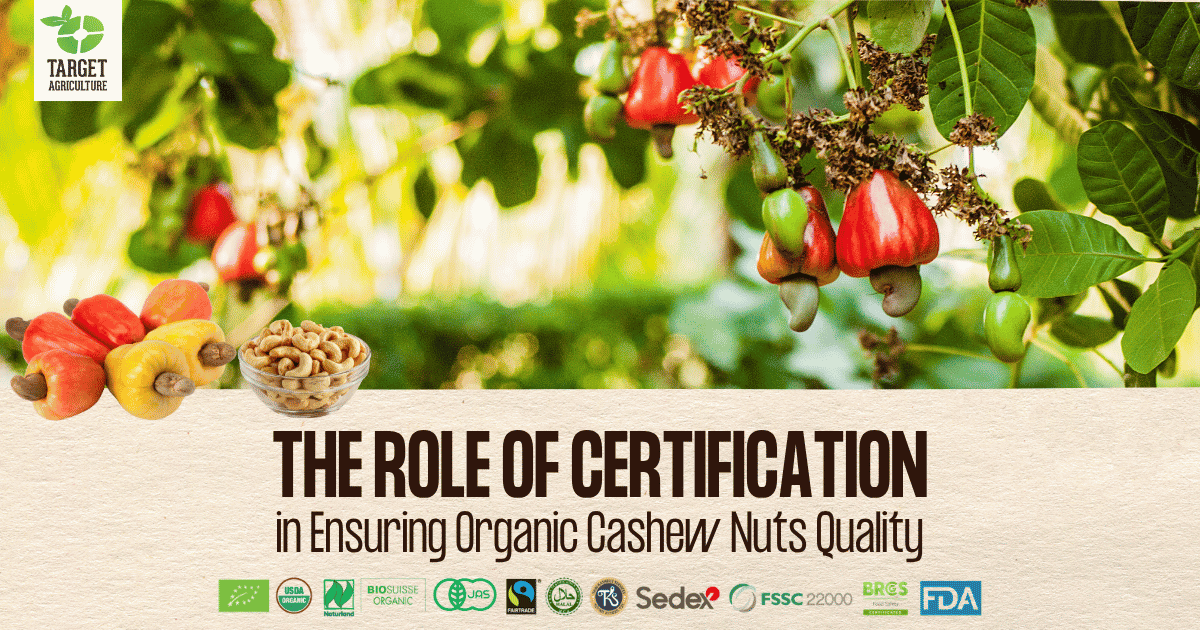
At Target Agriculture Vietnam, every shipment of certified organic cashews from our Binh Phuoc supply chain comes with full lot traceability, moisture records at multiple checkpoints, and grading documentation against buyer-approved reference samples. Our facilities hold EU Organic · USDA-NOP · JAS · Naturland · Fairtrade · BRC · SMETA · Halal · Kosher certifications — each requiring the quality system, not just the product, to be audited annually.
We do not position ourselves as the cheapest option. We position ourselves as the most documented one — because in a supply chain where the hidden costs accumulate quietly, documentation is what protects both parties when it matters most.
The buyers who build the most stable cashew supply chains are not the ones who found the lowest price. They are the ones who asked the right questions before placing the first order — and chose suppliers who could answer with documentation, not just assurances.
Choosing a cashew supplier in Vietnam is a risk management decision. The suppliers who reduce that risk most effectively are the ones worth paying a fair price for.
👉 Contact Target Agriculture to request quality documentation, certification details, or discuss long-term supply partnership.