



From the soils of Brazil to the farms of Vietnam — the cashew tree has fed economies, sustained communities, and outlasted generations. Here is everything that makes it extraordinary.
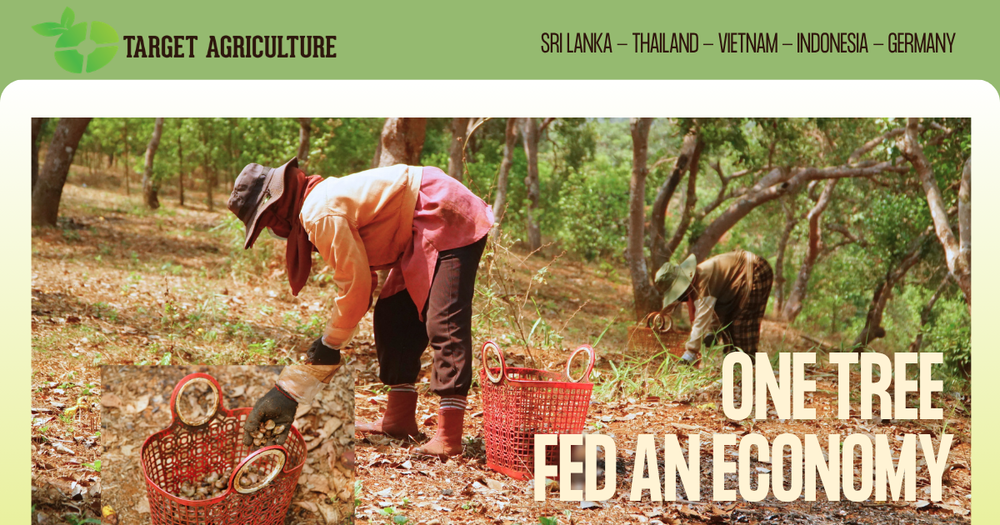
The cashew tree (Anacardium occidentale L.) is a tropical industrial crop native to Brazil, later introduced and widely cultivated in West Africa, India, and Vietnam. Its remarkable adaptability to nutrient-poor soils and semi-arid climates makes it not only an important source of economic value through cashew nuts but also a contributor to smallholder livelihoods and ecological sustainability.
For countries like Vietnam, where Binh Phuoc province has become the heartland of cashew cultivation, the cashew tree is more than agriculture. It is an economic foundation.

Few crops are as well-engineered for resilience as the cashew tree. Every part of its structure serves a purpose — and that structure is what allows it to thrive where other crops cannot.
- Root System: The cashew tree develops a deep taproot reaching up to 2 metres, with lateral roots extending 4–8 metres in diameter. This architecture enables efficient water uptake and nutrient acquisition from deeper soil layers, conferring drought tolerance.
- Stem and Canopy: The tree is relatively short (6–12 metres), with early branching and a broad, spreading crown that may reach 20 metres in width. This canopy structure provides shade and reduces evapotranspiration.
- Leaves: Simple, alternate leaves with thick lamina minimize water loss. Young leaves often display a reddish hue before maturing to green.
- Flowers: Small, whitish to pinkish flowers are borne in cymose clusters. Both male and hermaphroditic flowers occur on the same tree, with pollination primarily mediated by bees and other insects, directly influencing fruit set and yield.
- Fruit: The true fruit is the cashew nut, attached to the end of a fleshy pseudofruit. The pseudofruit is rich in vitamin C and suitable for juice production. Raw cashew nuts are the principal commercial product, processed for consumption or industrial use.
The cashew tree follows a well-defined seasonal cycle that shapes every aspect of the supply chain. In Vietnam, flowering occurs between December and January, coinciding with leaf shedding and renewal. Harvesting typically spans February to May — a window that demands careful farm management to maximize yield quality.
Yields are strongly dependent on climatic conditions and pollination efficiency. The productive lifespan of a cashew tree is approximately 25–30 years, after which yields gradually decline — making early investment in tree health and soil management critical to long-term farm profitability.
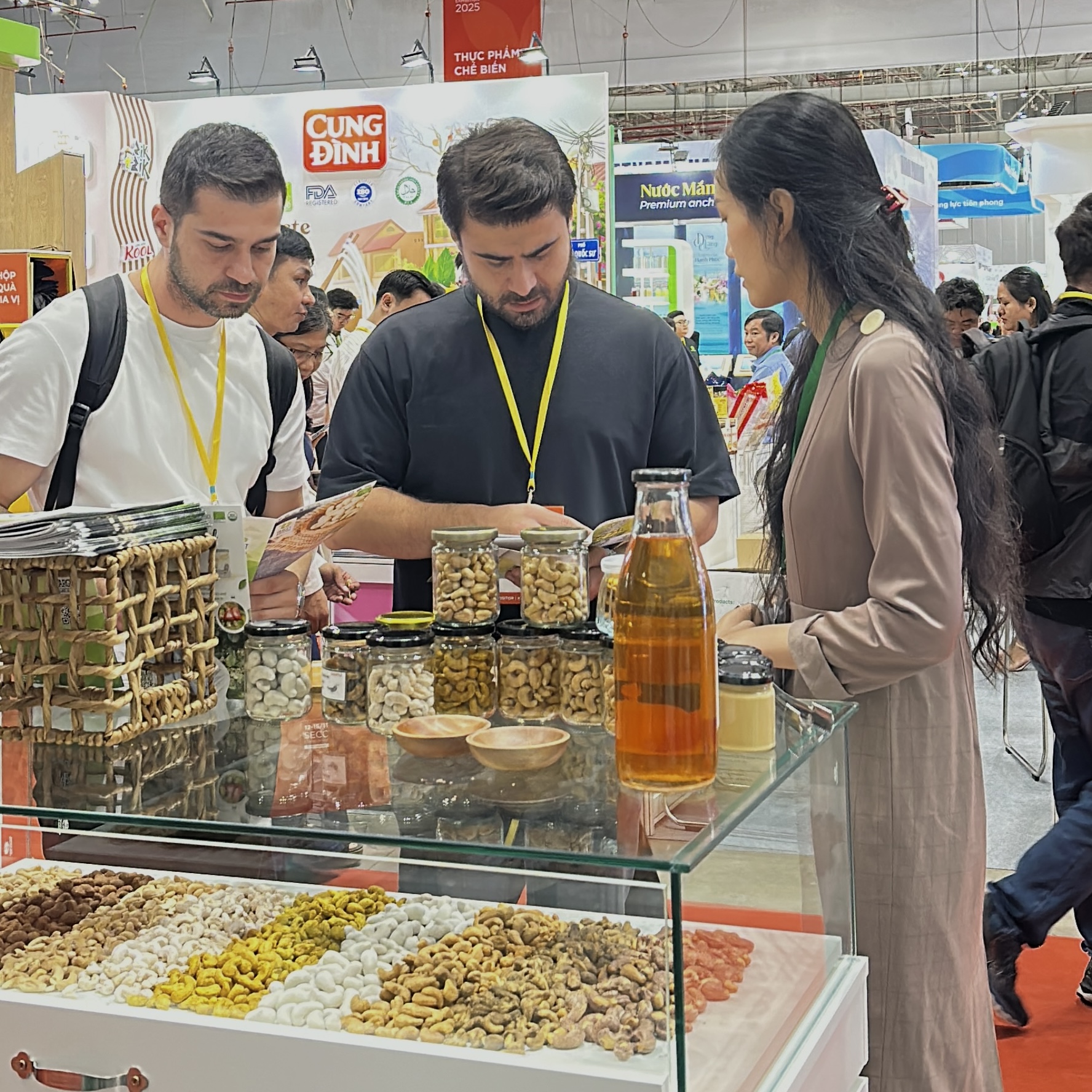
The cashew tree's value extends well beyond the kernel inside its shell. Its contributions operate on two levels simultaneously.
Ecological Value
- Stabilizes and conserves soil in marginal, erosion-prone land
- Improves land quality in areas unsuitable for most other crops
- Reduces surface runoff and supports biodiversity in semi-arid zones
Economic Value
- Cashew nuts represent a major export commodity — Vietnam alone accounts for more than 50% of global cashew processing volume
- Cashew apple enables juice, wine, and food processing applications
- Cashew nut shell liquid (CNSL) supports industrial and chemical applications
- For smallholder farmers, cashew cultivation diversifies income and reduces reliance on single staple crops
The cashew tree is not simply a crop. It is a resilient, multi-purpose plant that has built export industries and sustained farming communities for generations. For Target Agriculture Group, understanding that tree — its cycle, its soil, its season — is the starting point for every organic cashew product we grow, process, and export.
 YOUTUBE - LINKEDIN