


Trace pesticide residues in organic cashews aren't always a farming failure. Here's where cross-contamination really comes from and how to prevent it.
Organic farming prohibits the use of synthetic pesticides, but trace pesticide residues may still occur due to unintentional cross-contamination. These residues are not necessarily the result of improper farming practices and can originate from different stages of the supply chain.
Understanding these risks helps importers better interpret laboratory results and highlights the importance of preventive quality management.
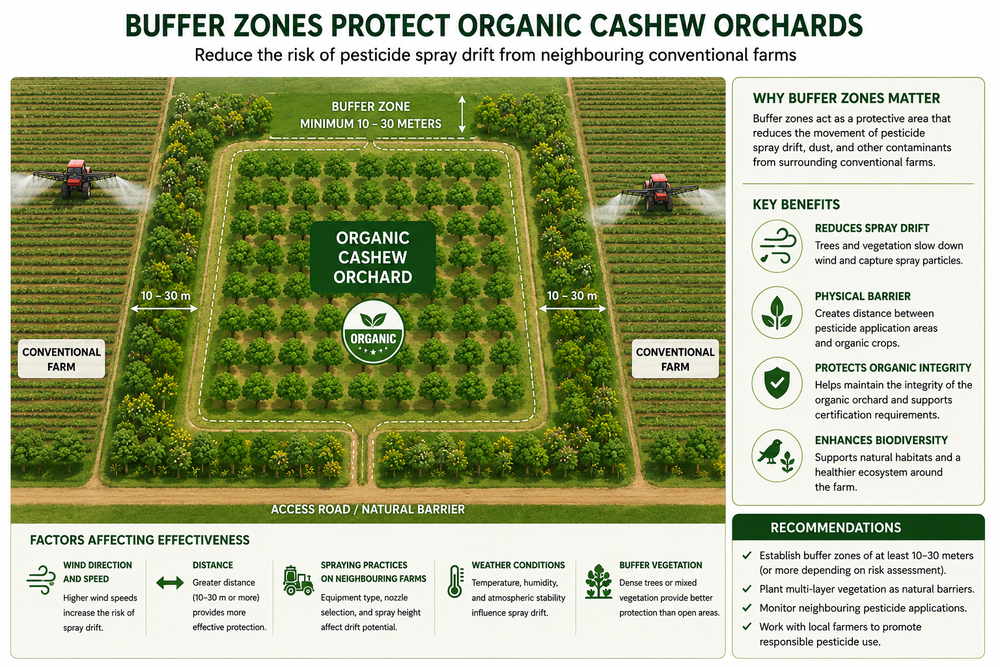
One of the most common sources of unintended pesticide contamination is spray drift. This occurs when pesticides applied on nearby conventional farms are carried by wind or air currents and unintentionally settle on neighbouring organic orchards.
The likelihood of spray drift depends on several factors, including:
- Wind speed and direction during pesticide application
- The distance between conventional and organic farms
- The type of spraying equipment used
- Weather conditions, such as temperature and humidity
- The presence and effectiveness of buffer zones
Although organic farmers do not apply synthetic pesticides, they cannot always control agricultural activities on neighbouring land. For this reason, spray drift is widely recognised by organic certification bodies as a potential source of trace pesticide residues.
Both the USDA National Organic Program and the European Commission's organic farming regulation require certified operations to maintain defined buffer zones sufficient to prevent this kind of contamination.
To minimise this risk, responsible producers establish buffer zones, carefully select growing locations, monitor surrounding farming activities, and work closely with neighbouring communities to promote responsible pesticide use.
Transportation is another potential source of pesticide cross-contamination.
If trucks, shipping containers, or bulk transport equipment have previously carried agricultural products treated with pesticides or fumigants, trace residues may remain on interior surfaces when cleaning procedures are inadequate.
To minimize this risk, responsible exporters should:
- Inspect transport equipment before loading
- Verify that vehicles and containers are clean and free from chemical residues
- Follow appropriate loading procedures to prevent cross-contact
- Keep transport records as part of the traceability system
Well-managed transportation practices help maintain product integrity throughout the export process.
At Target Agriculture Group, every truck and shipping container is thoroughly inspected before loading to ensure it is clean, dry, and free from any potential chemical contamination. We verify the cleanliness of transportation equipment and only load products after confirming that no contamination risks are present.

Storage facilities require effective pest management to protect food products from insects, rodents, and other pests. In some warehouses, approved insecticides or fumigation treatments are used as part of routine pest control programmes.
Although these treatments help protect stored products, improper application or poor warehouse management may increase the risk of unintended contamination.
Potential sources include:
- Residues from warehouse pest control treatments
- Fumigation chemicals used during storage
- Cross-contact with previously stored agricultural products
- Inadequate segregation between organic and conventional products
Professional warehouse management combines effective pest control with strict hygiene procedures, routine cleaning, and proper product segregation to minimise contamination risks while maintaining food safety.
At Target Agriculture Group, we eliminate this risk by using Low Oxygen (Controlled Atmosphere) technology instead of chemical fumigation. This residue-free method effectively controls live insects while helping preserve the integrity of our organic cashews and supporting international food safety requirements.
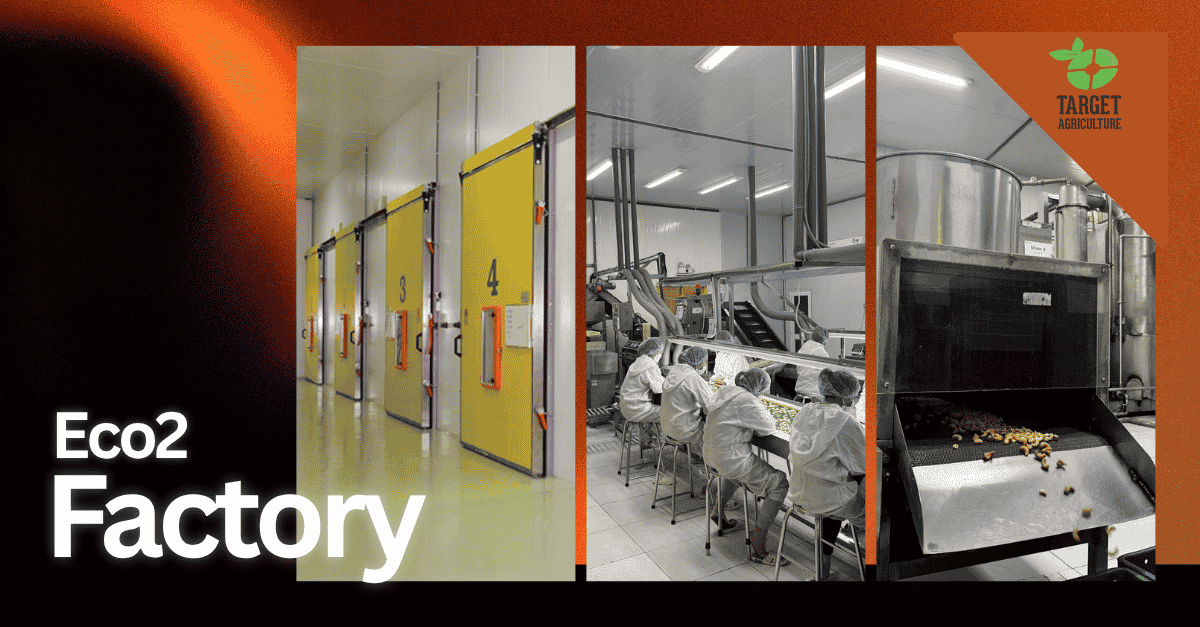
Packaging materials are often overlooked, but can also contribute to pesticide cross-contamination if they are not properly controlled.
Potential risks include:
- Packaging stored in areas exposed to pesticides or fumigation chemicals.
- Cross-contamination during the storage or transportation of packaging materials.
- Packaging materials exposed to agricultural chemicals before use.
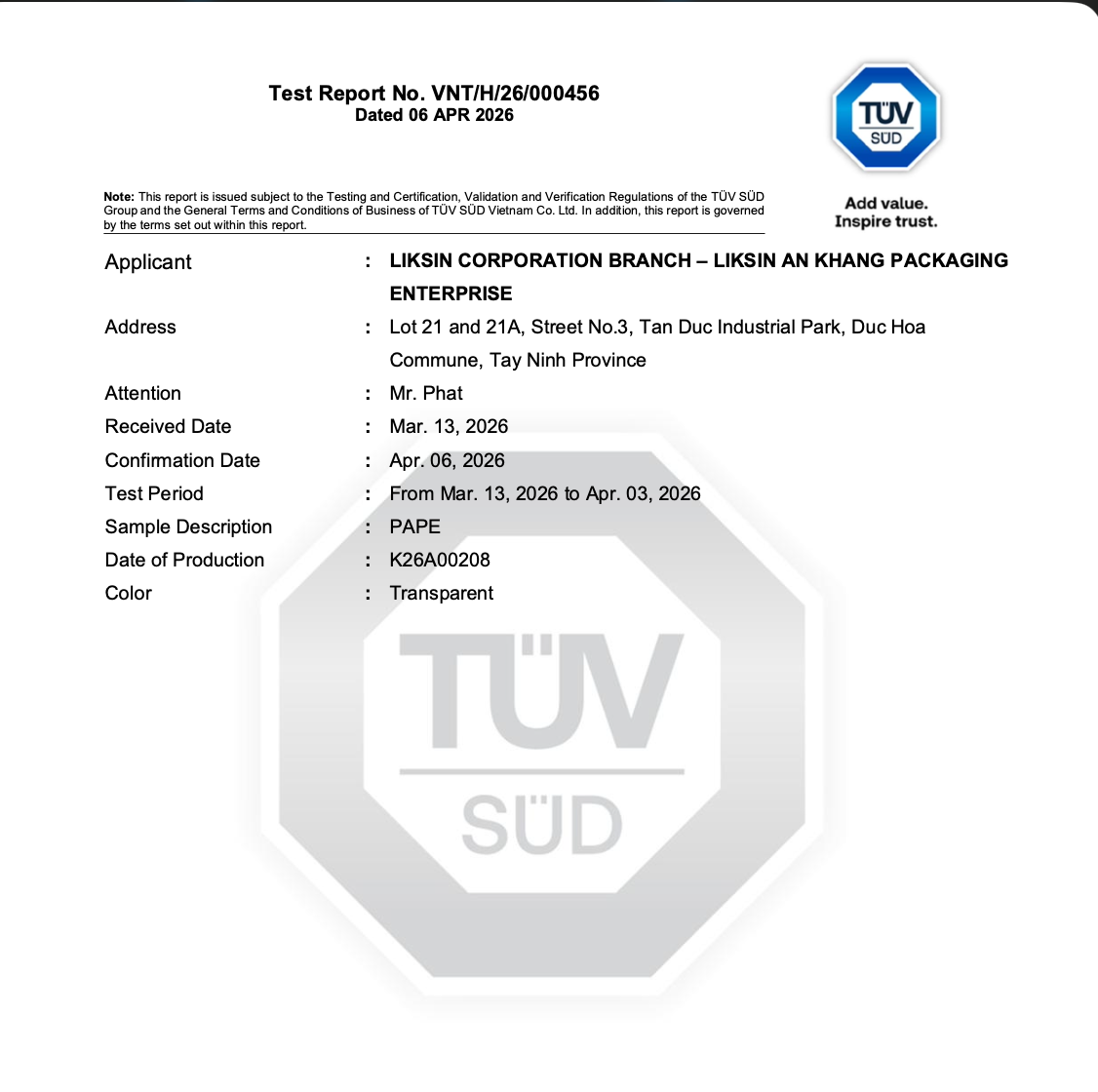
- Raw materials used to manufacture packaging may contain agricultural chemical residues if supplier controls and material verification are not adequately implemented.
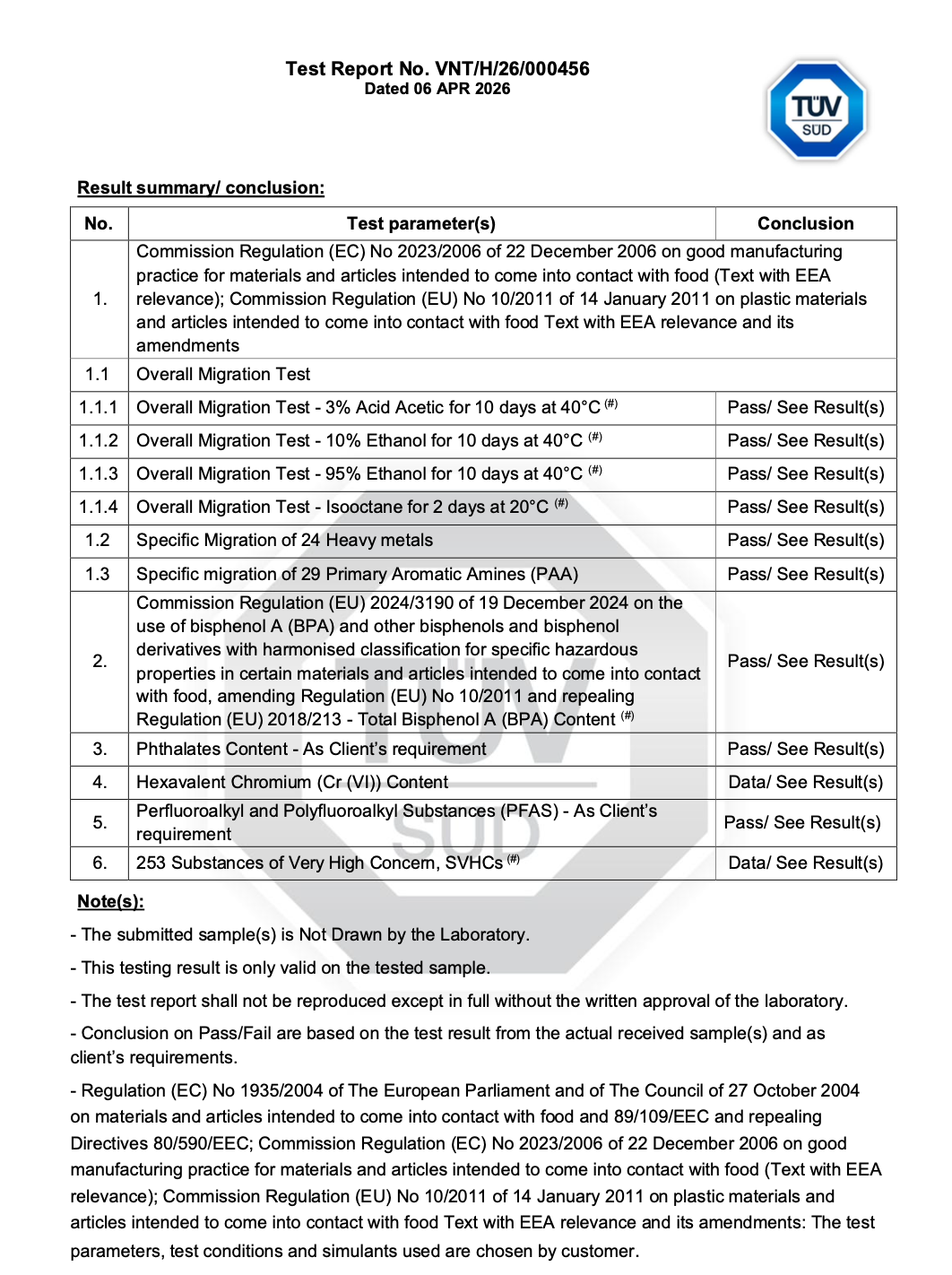
To reduce these risks, exporters should work with qualified packaging suppliers, maintain clean storage conditions, and ensure that packaging materials are suitable for food contact and protected throughout the supply chain.
Trace pesticide residues do not always indicate improper farming practices. In many cases, they require a thorough assessment of the entire supply chain to identify the potential source and determine the appropriate corrective actions.
For importers, choosing a supplier with strong preventive controls, full traceability, and transparent quality management is the best way to minimise risks and build long-term confidence.
At Target Agriculture Group, we are committed to managing pesticide cross-contamination through:
- Qualified supplier selection
- Farm-to-export traceability
- Transport inspections before loading
- Low-oxygen fumigation technology,
- Controlled storage and warehouse hygiene
- Food-safe packaging verification
- Regular testing by ISO/IEC 17025 accredited laboratories
Our goal is to deliver organic cashews that meet international food safety standards while providing our customers with confidence in every shipment.
👉 Contact Target Agriculture Group to learn more about our quality management system or discuss your organic cashew sourcing requirements.
 YOUTUBE - LINKEDIN