



Cashew intercropping is a farming practice that allows growers to make better use of available land by cultivating suitable crops between cashew trees. When planned carefully, intercropping can provide additional income, protect soil, and diversify farm production while young cashew trees develop.
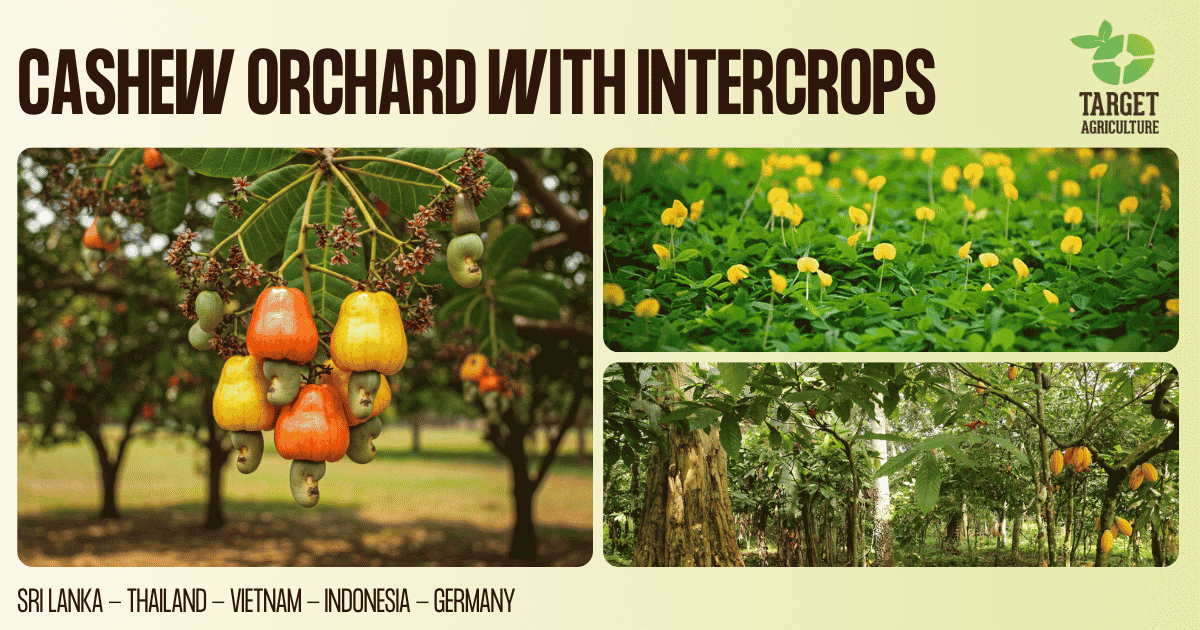
The right approach depends on orchard age, tree spacing, soil conditions, rainfall, and the water and sunlight requirements of each crop. For cashew growers, the goal is to increase land productivity without compromising the growth, health, or long-term yield of the main cashew trees.
Young cashew trees need time to mature before reaching productive yields. During this establishment period, suitable short-cycle crops can provide an additional source of farm income. Legumes, selected vegetables, and other locally adapted crops may help farmers generate returns while waiting for their cashew orchard to become productive.
The best options depend on local markets, seasonal conditions, labor availability, and production costs.
Ground cover between cashew rows can help reduce soil erosion during heavy rainfall and limit direct exposure to sunlight. Leguminous crops may also contribute to soil fertility through biological nitrogen fixation when compatible varieties and appropriate cultivation practices are used.
Maintaining suitable ground cover and managing crop residues can support soil structure and moisture conservation. However, the benefits depend on crop selection and how the intercropping system is managed.
In orchards with sufficient space and sunlight, intercropping can make productive use of land between tree rows. A well-designed system may also suppress some weeds and diversify farm output.
However, intercrops can compete with cashew trees for water, nutrients, and light. Farmers should therefore consider seasonal rainfall, irrigation access, canopy development, and root competition before choosing a crop.
Crop selection should reflect the age of the cashew trees, available space, local climate, and market demand. No single crop is suitable for every cashew orchard.
During the early establishment years, when the cashew canopy is still open, farmers may consider:
- Legumes: Mung beans, soybeans, and peanuts can be useful options where soil and climate conditions are suitable. Legumes can contribute to soil fertility through nitrogen fixation, although the amount of nitrogen available to the soil depends on crop management and residue handling.
- Vegetables and other short-cycle crops: Locally suitable vegetables can offer relatively quick harvests when reliable markets and sufficient water are available.
- Sweet potatoes and selected field crops: These may be considered where planting arrangements, soil conditions, and machinery or labor requirements allow them to grow without damaging cashew trees.
- Corn and watermelon: These crops may be suitable in some locations, but their water, nutrient, and sunlight requirements should be assessed carefully.
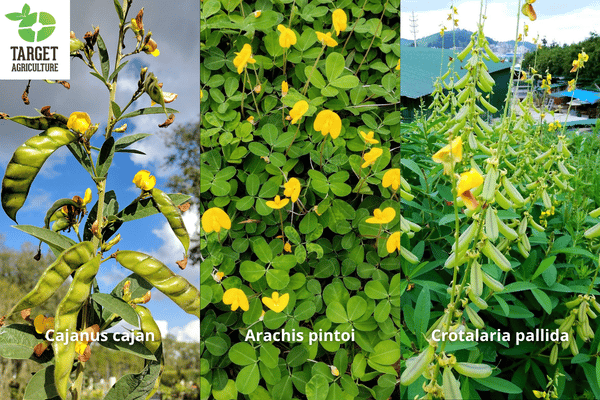
Fig 1: Nitrogen-fixing legumes
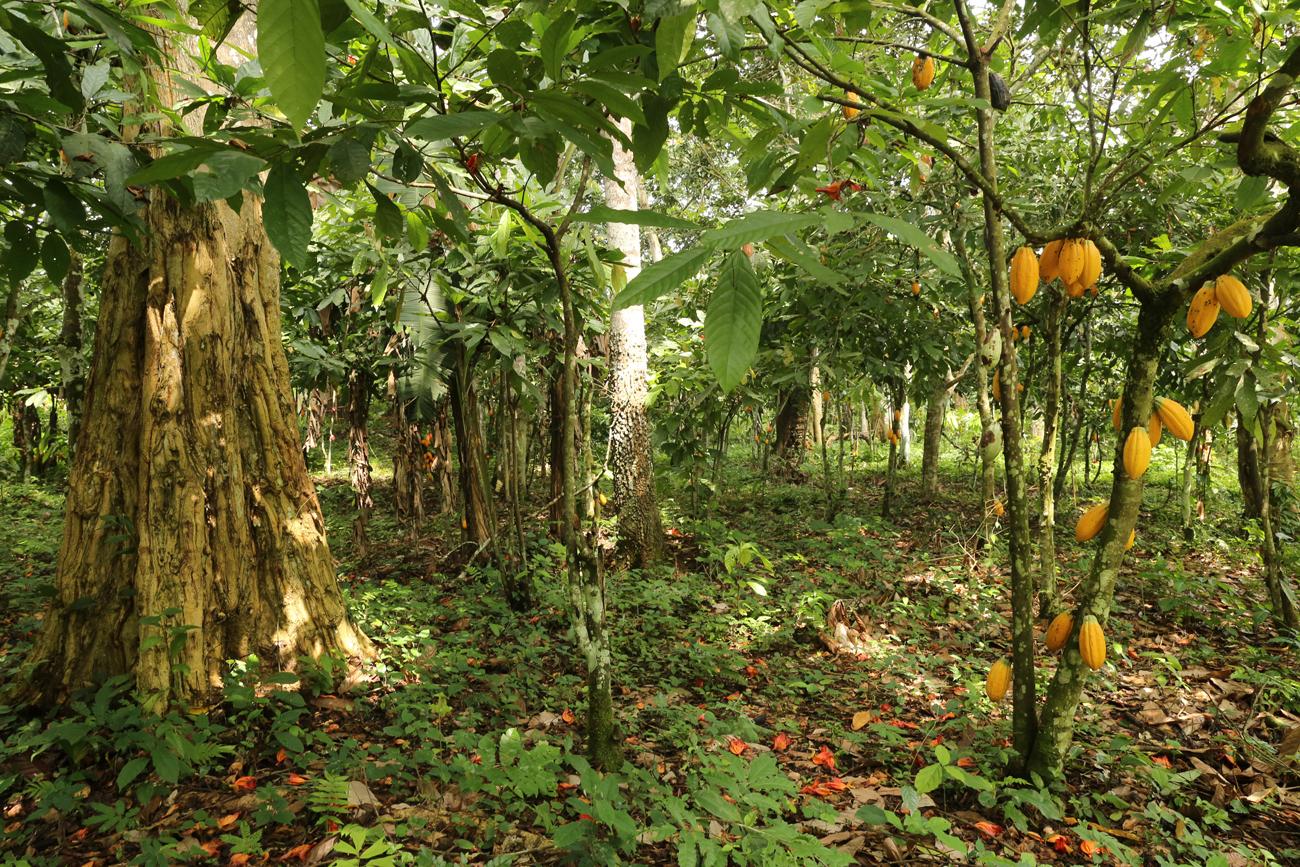
Fig 2: Cashew-cacao intercropping model
In established orchards with adequate spacing, selected perennial crops may diversify production. These systems require careful planning because mature cashew trees can create shade and compete for resources.
- Cocoa and coffee: These crops may suit selected agroforestry systems, depending on shade levels, local climate, soil conditions, and crop-specific management needs.
- Banana and papaya: Their growth and potential harvest periods may offer diversification opportunities where water, sunlight, and spacing are adequate.
- Other fruit trees: Mango, pomelo, and guava may be considered in carefully designed systems, provided their mature canopy size and root competition do not interfere excessively with cashew production.
Avoid applying one fixed spacing rule to every orchard. The appropriate distance between cashew trees and intercrops depends on the crop species, tree age, canopy spread, root competition, and local growing conditions. Keep the area around cashew trunks clear enough for routine maintenance and avoid damaging the trees during intercrop cultivation.
Pruning can help maintain airflow and manage shade when carried out according to appropriate cashew orchard practices. However, excessive pruning can reduce productive canopy area. Assess sunlight requirements for both crops before introducing shade-sensitive intercrops into a mature orchard.
Intercropped plants may require different irrigation schedules and nutrient inputs from cashew trees. Monitor soil moisture and crop growth, and adjust fertilizer applications according to soil conditions and crop requirements. Avoid allowing intercrops to compete with cashew trees during critical growth or flowering periods.
Inspect cashew trees and intercrops regularly for pests, diseases, and signs of resource stress. Select compatible crops and maintain sufficient space for harvesting, pruning, and other orchard operations.

Fig 3: Cashew farm model intercropped with pepper and coffee
Intercropping in cashew farms not only solves immediate economic problems but also aims for sustainable agricultural development. Choosing the right crops and applying appropriate care techniques will help cashew growers increase the value per unit area of cultivated land.
A successful cashew intercropping system balances short-term farm income with the long-term productivity of the main crop. By choosing suitable intercrops, protecting soil, and managing water, nutrients, and canopy growth, farmers can diversify production while maintaining a focus on cashew orchard health.
For buyers, understanding how cashews are grown is also part of understanding the wider supply chain. Explore Target Agriculture’s organic cashew traceability approach to learn how farm-level sourcing connects with supply-chain transparency. You can also read about how organic cashews are processed and discover more about Vietnam’s cashew industry.
The most effective intercropping plan is one adapted to local field conditions. With thoughtful crop selection and ongoing monitoring, cashew growers can make better use of their land while supporting resilient and productive farming systems.
 YOUTUBE - LINKEDIN