A certificate shows compliance. Daily practice proves control. Here is how BRCGS auditors test whether a Certified Organic Cashew Supplier can deliver both.
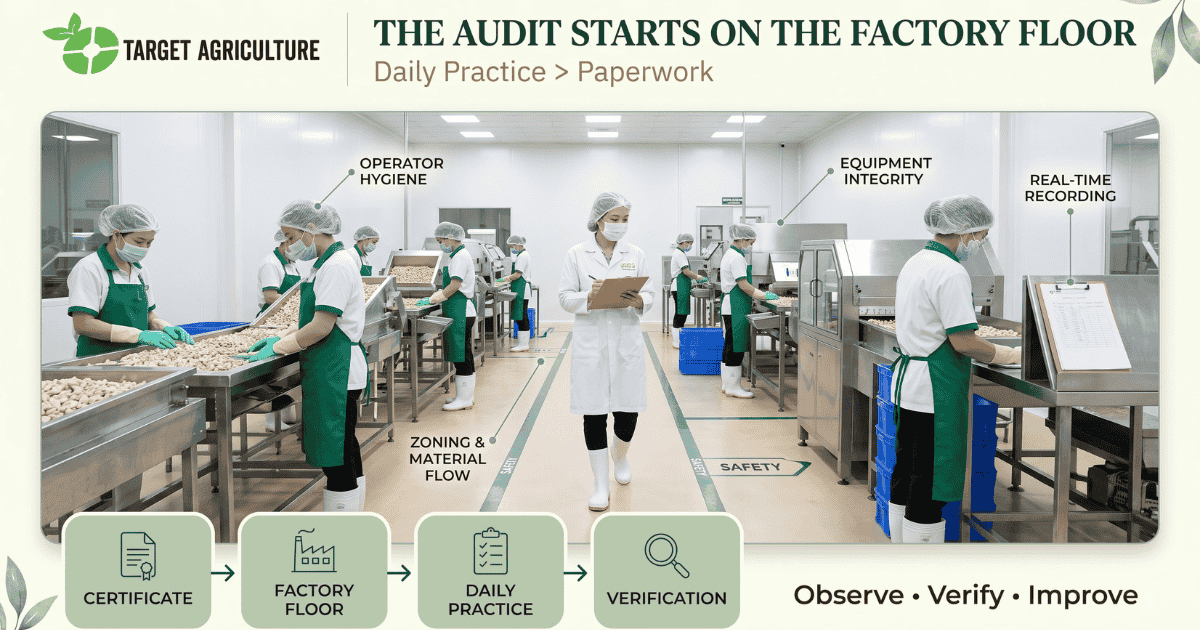
Buyers often see a certificate before they see a factory. BRCGS auditors begin in the opposite place: they observe production and compare everyday practice with the documented system. In a cashew facility, this can include personnel hygiene, zoning, equipment condition, cleaning, maintenance, storage, and the movement of materials through the site.
Small details reveal whether control is routine. Are operators following their training? Are food-contact tools protected from contamination? Are deviations recorded when they occur? A polished manual cannot compensate for inconsistent behaviour. For a buyer, this is the first test of a Certified Organic Cashew Supplier: the system must remain visible when no audit presentation is being made.
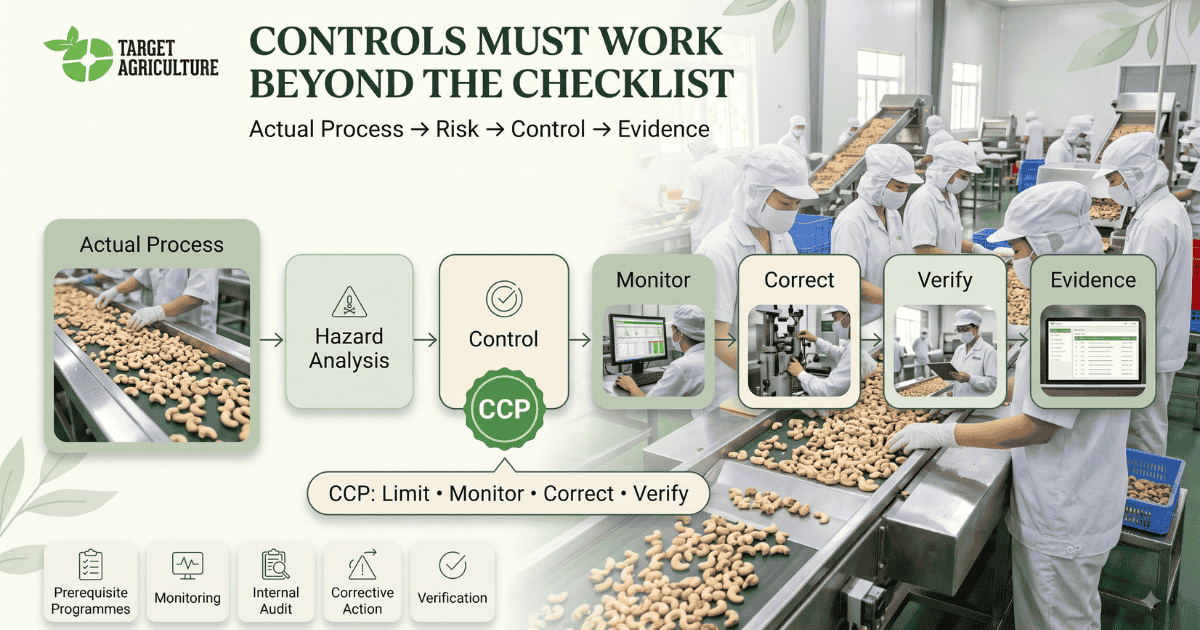
Auditors then examine how the site applies hazard analysis, prerequisite programmes, monitoring, verification, internal audits, and corrective actions in daily operations. HACCP helps the team identify significant hazards and appropriate controls, while the wider management system connects product safety, legality, quality, and site practices.
Those controls must reflect the plant's actual process flow and risk assessment. If a Critical Control Point is identified, the site should define limits, monitor results, respond to deviations, verify effectiveness, and retain evidence — the same discipline we apply to foreign body and allergen control across our processing lines. Buyers should confirm any detailed statement about BRCGS requirements against the applicable standard and issue, because audit scope and site conditions can differ.
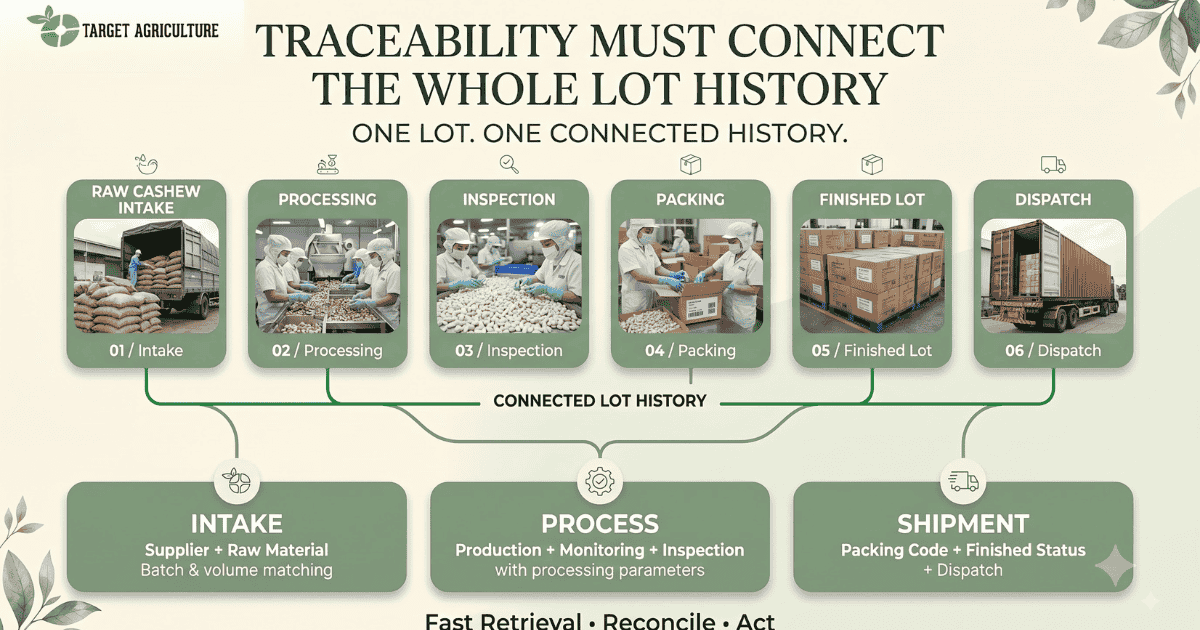
Traceability turns a shipment into a connected history. If a finished lot raises a concern, the factory should be able to link it with incoming materials, production records, inspection results, packaging identification, and dispatch documents. The real test is not whether each record exists, but whether the team can retrieve and reconcile the information efficiently.
A practical review should connect three points:
- raw-cashew intake and supplier information;
- processing, monitoring, and inspection records;
- packing codes, finished-product status, and dispatch documents.
For international buyers, this chain supports faster investigation and more focused action. It also shows whether a supplier can substantiate product and process claims. In practice, a buyer can request a recent traceability-test summary and check whether the quantities entering, being processed, and leaving the site reconcile.
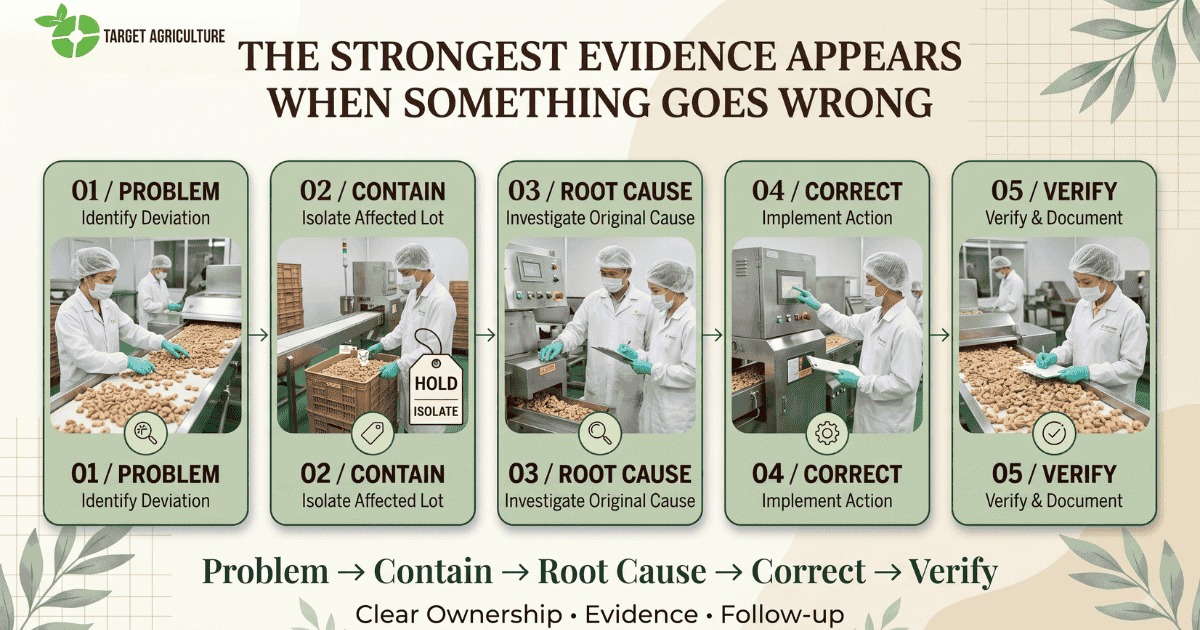
No credible system assumes problems will never occur. Auditors examine how the site identifies a non-conformity, contains its impact, investigates the root cause, assigns corrective action, and verifies that the solution works. Repeated issues may indicate that an earlier action addressed only the symptom.
Deviation records therefore offer useful evidence to buyers. Normal production shows how a supplier performs under stable conditions; corrective-action records show how the organization responds under pressure. Clear ownership, supporting evidence, and documented follow-up demonstrate a more mature system than a brief note saying the issue was closed.
A BRCGS certificate should open the conversation, not end it. Procurement teams can ask for a recent traceability test, an example of a closed corrective action, evidence that monitoring records were reviewed on schedule, and an explanation of how customer specifications become production controls. Any published performance figure or audit result should identify its source, reporting period, and scope.
The stronger question is not simply, “Do you have BRCGS?” It is, “Can you show how control is maintained for my product and market?” That shift helps buyers compare suppliers on operational capability, transparency, and readiness to respond—not on certificates alone.
A BRCGS audit gives buyers a practical view of whether food-safety and quality systems hold together—from factory-floor discipline and hazard controls to traceability and corrective action. The certificate matters, but the evidence behind it matters more.
At Ziellandwirtschaft, we believe a Certified Organic Cashew Supplier should deliver more than compliant paperwork. We connect clear specifications, disciplined processing, documented controls, and traceable lots so buyers can source with confidence, shipment after shipment. Share your target market, product specification, packaging format, and expected volume with our team to start a sourcing assessment.
 YOUTUBE - LINKEDIN