


Cashew soils in Vietnam are losing fertility, struggling with drought, and facing climate pressure. Biochar — made from cashew's own waste — may be the most practical answer farmers have yet to try.
Beneath the growing global interest in certified organic cashews lies a quieter challenge many farms in Vietnam navigate every season: declining soil fertility, low organic matter, poor water retention, and compounding climate pressure. [*] For cashew farmers in Binh Phuoc and Dong Nai — where Target Agriculture sources its certified organic supply — these conditions determine whether a 25-year orchard remains productive through its full lifespan, or begins to decline before it should.
Biochar is emerging as one of the most promising practical responses.
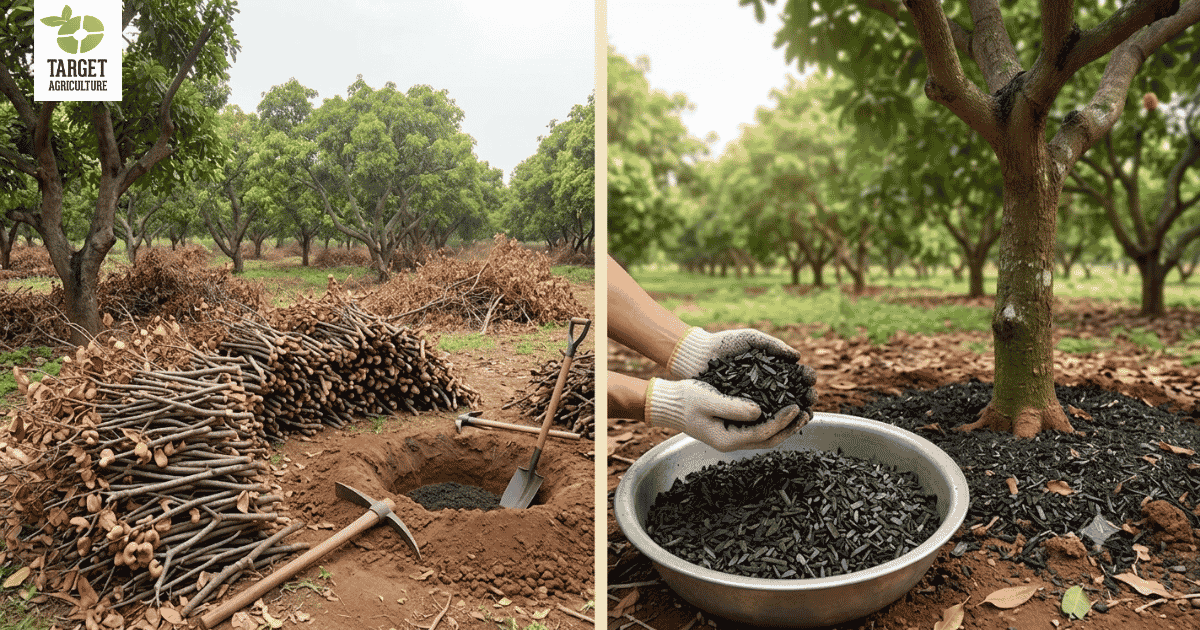
Biochar is a carbon-rich material produced through the pyrolysis of biomass — pruned branches, cashew shells, and agricultural by-products — under low-oxygen conditions. When incorporated into soil, it:
- Improves aeration and soil structure
- Acts as a moisture reservoir, gradually releasing water to roots during dry periods
- Reduces nutrient loss — keeping nitrogen, phosphorus, and potassium available longer
- Creates habitat for beneficial microorganisms that support nutrient cycling
For cashew trees grown on sandy or degraded soils in drought-prone regions, these properties are not minor improvements — they are the difference between a tree that survives a dry season and one that thrives through it.
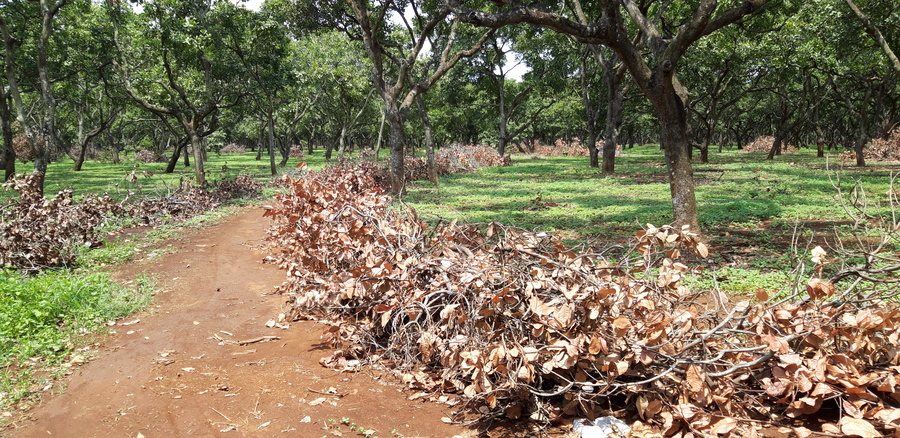
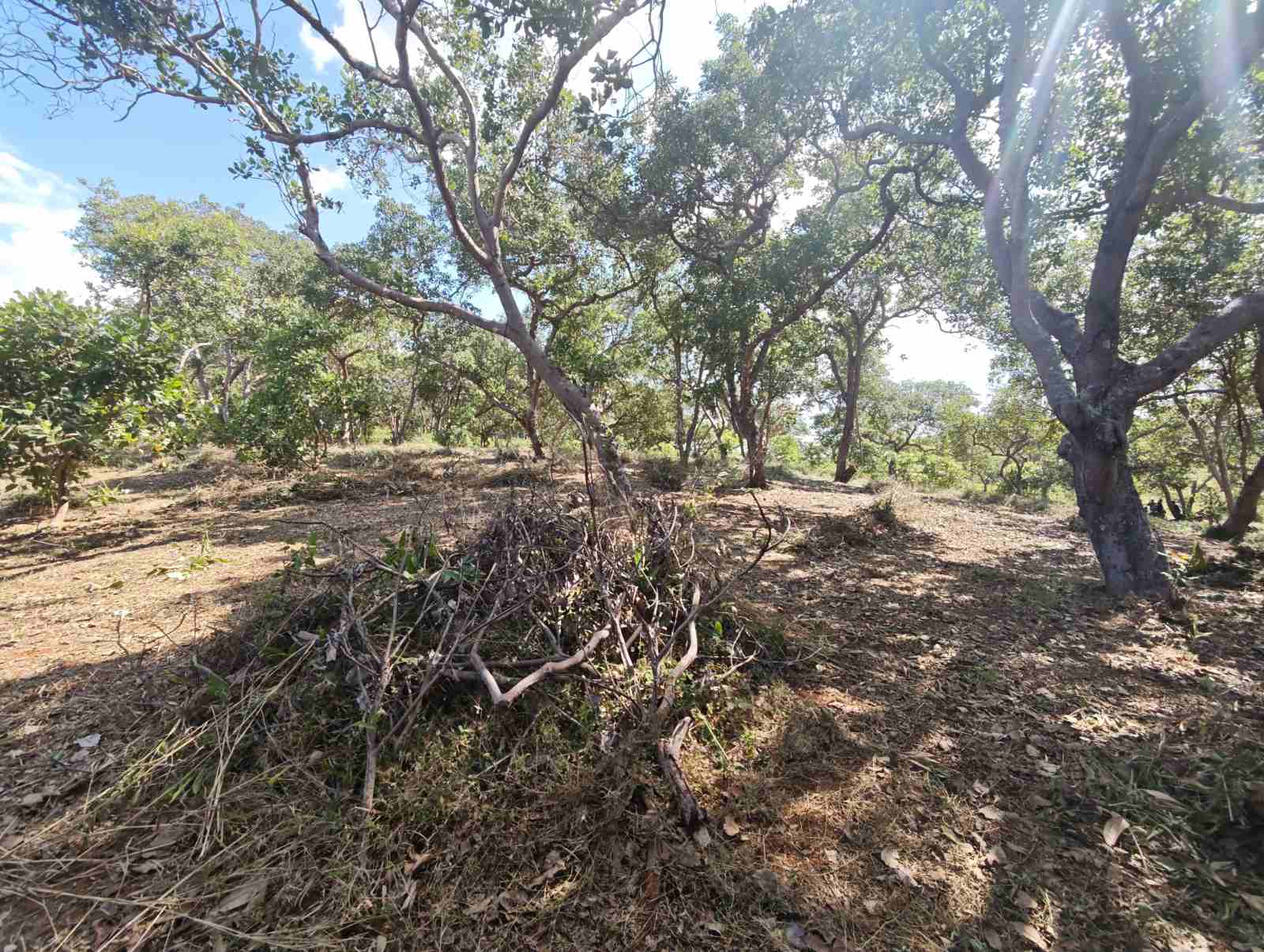
What makes biochar particularly compelling for organic cashew farming is its raw material source. Pruned branches, old tree biomass, and cashew shells — typically burned or discarded — can be converted directly into biochar, creating a circular system within the farm itself.
Beyond agronomic benefits, the carbon in biochar can remain stable in soil for hundreds or even thousands of years — sequestering carbon and reducing greenhouse gas emissions. For certified organic exporters committed to reducing their carbon footprint, biochar delivers agronomic, economic, and environmental returns simultaneously.
To maximise results, biochar should be combined with organic fertilizers, well-rotted manure, or microbial inoculants before application. This approach aligns directly with the composting practices Target Agriculture's Field Officers already implement alongside farming families in Binh Phuoc — where cow manure, coffee husk, and Trichoderma are used to build soil fertility through a 100–120 day composting cycle. Biochar fits naturally into this existing system.
By converting cashew by-products into long-lasting soil conditioners, farmers can improve soil quality, increase drought resilience, and contribute to the climate-resilient agriculture that the global organic market increasingly demands.
At Target Agriculture Group, we are committed to practices that strengthen the farms behind our certified organic cashew supply chain — not just for this season, but for the farmers who will tend these orchards for decades to come.
👉 Learn more about Target Agriculture's organic farming practices at target-agriculture.com
 YOUTUBE - LINKEDIN