



Binh Phuoc is Vietnam's cashew heartland and behind every certified organic kernel that leaves our farms is a set of decisions that started long before the first harvest. This is how we make them.
What follows is drawn directly from the practices our Field Officers implement alongside farming communities in Binh Phuoc and Dong Nai — the same methods that underpin the certified organic cashew supply chain Target Agriculture has been building for over thirty years. Each step matters. And each builds on the one before it.
A good cashew orchard starts with a well-prepared plot. After clearing bushes and weeds from the area, the soil needs to be loosened and holes prepared ahead of planting:
- Light or medium soils: holes measuring 60 × 60 × 60 cm
- Heavy soils: holes measuring 1 × 1 × 1 m, spaced 10–15 m apart
Topsoil and subsoil should be separated during digging, and the holes left open to dry in full sun for 2–4 weeks before being filled. This sun-drying period is not a waiting time — it is an active pest control step, killing termite colonies in the soil before they can damage young root systems.
Skipping this stage is one of the most common and costly mistakes in new cashew orchard establishment.
Seed selection directly determines the long-term productivity of the orchard. The process is straightforward but must be done carefully:
Dissolve a handful of salt in 10 litres of clean water. Add the selected seeds and wait 10 minutes. Remove any seeds that float — these are low-density, poor-quality seeds unlikely to germinate well. Keep only the seeds that sink. Rinse thoroughly, soak in clean water for 2 days, then dry before sowing face-down for optimal germination.
When seedlings reach approximately 20 cm in height, select only the healthiest individuals for transplanting into the prepared orchard holes. This selection step is as important as the seed selection — weak seedlings do not become strong trees.
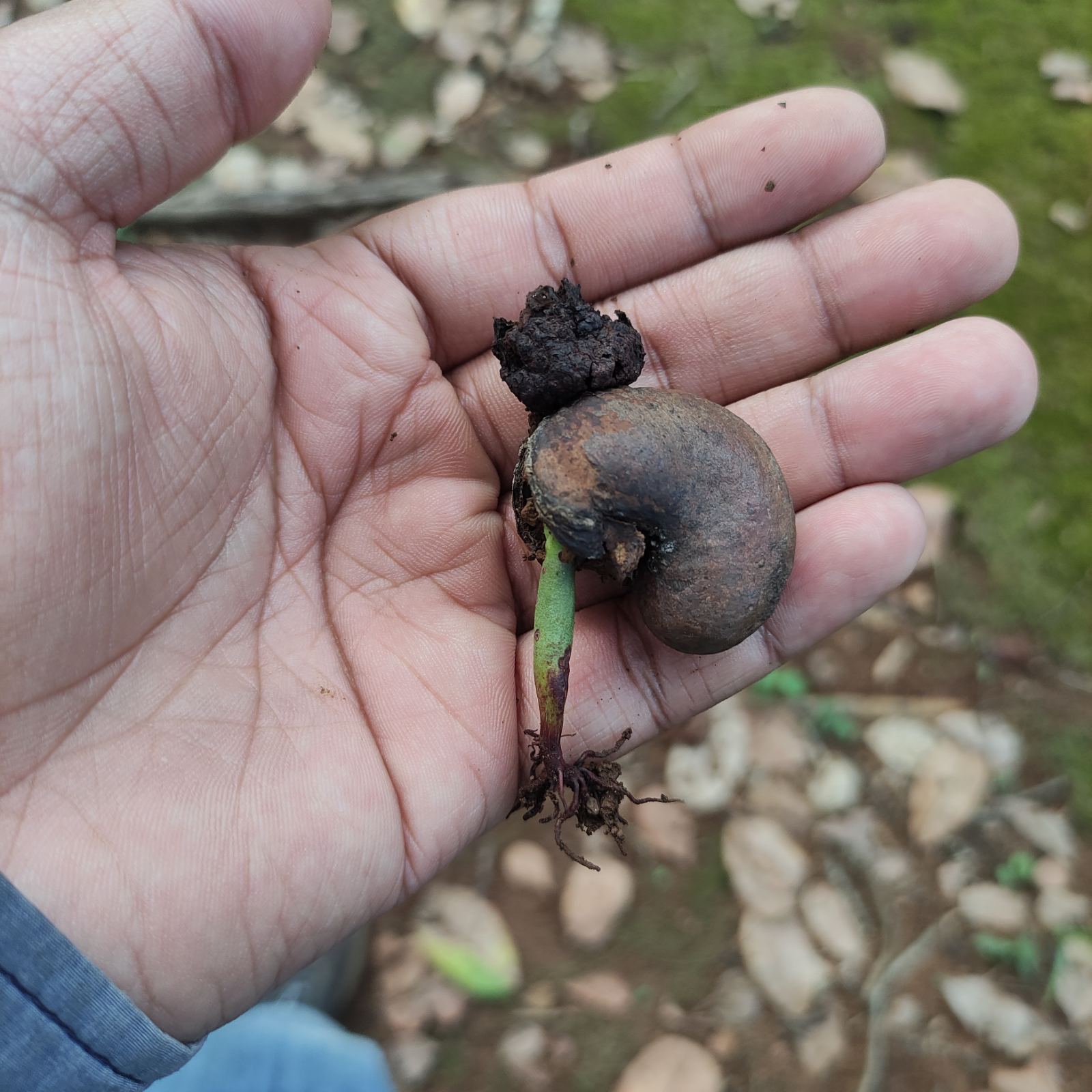
Fig.1: Sprouted cashew nuts.
Planting density should be matched to the specific conditions of each plot:
- Poor soils: 6 m × 8 m spacing
- Nutrient-rich or deep soils and sandy coastal areas: 8 m × 8 m spacing
- Steep slopes: rows spaced 10–15 m apart, with 6–8 m between trees within each row
Two systems are commonly used. The square system places trees at equal spacing in both directions. The triangular system staggers rows so trees occupy the corners of equilateral triangles — improving light distribution across the canopy and often increasing effective yield per hectare on suitable terrain.
Young cashew trees take years to reach productive maturity. Intercropping makes that waiting period economically viable.
In the early years, short-cycle crops like rice or corn can be grown between the young cashew trees, generating income while the orchard establishes. As the trees mature and canopy cover increases, transitioning to shade-tolerant crops with higher economic value — such as coffee or durian — can generate meaningful secondary income streams that continue alongside the cashew harvest season.
This is not just an income strategy. Intercropped plants contribute to weed suppression, soil cover, and biodiversity within the orchard — all of which matter in certified organic systems where synthetic weed control is not available.
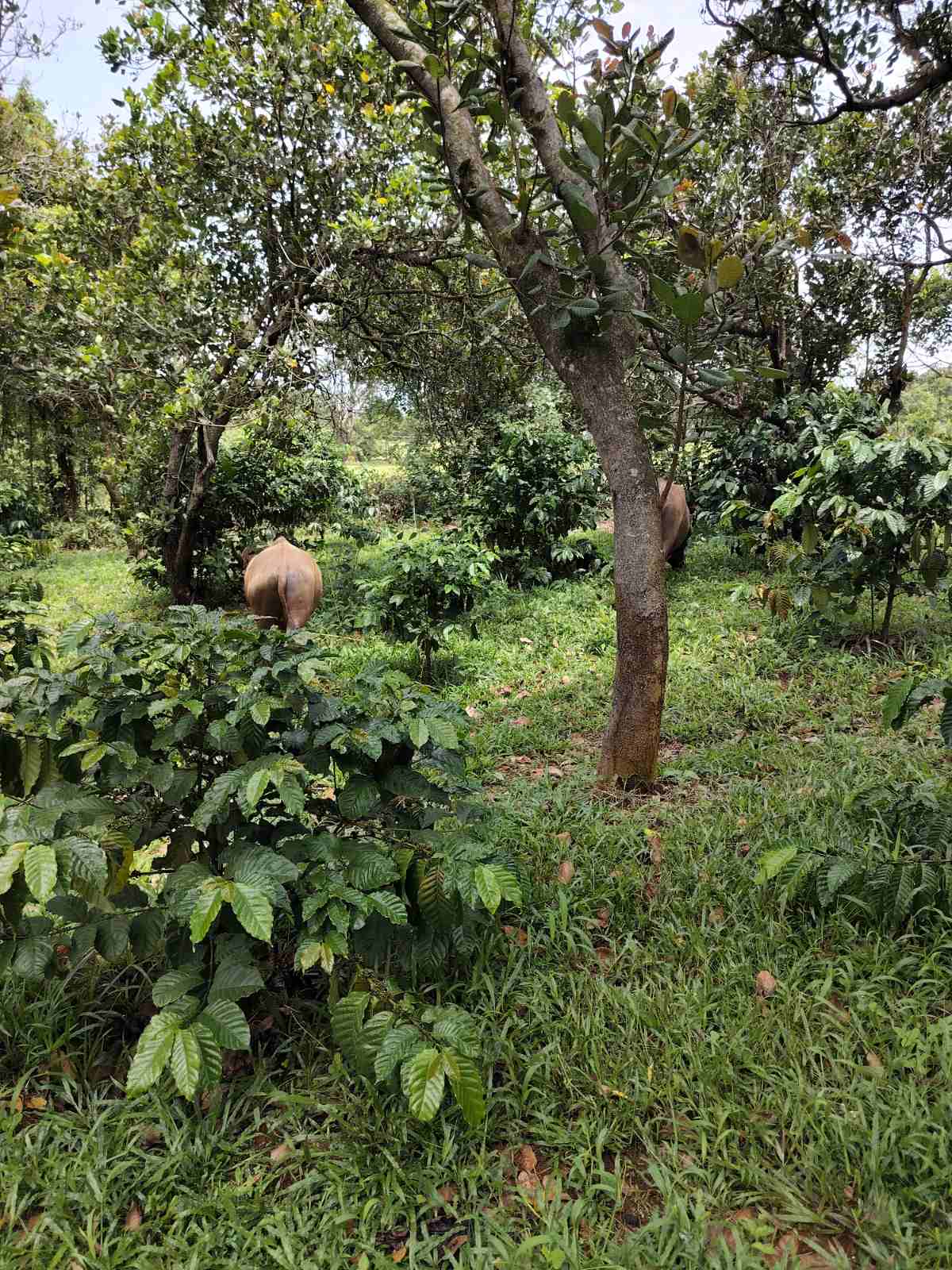
Fig. 2: Intercropping coffee in cashew farm.
Weeds compete directly with young cashew seedlings for water and nutrients in the same soil layer — and the damage is most severe in the early development stages when the trees are least able to compete.
Effective organic weed management in cashew orchards uses a combination of approaches:
- Straw mulching in low-rainfall areas — suppressing weeds while retaining soil moisture and moderating soil temperature
- Intercropping as a long-term structural solution — ground cover crops outcompete weeds while providing economic returns
- Mechanical cutting where needed, accepting its short-term effectiveness as part of a broader management approach
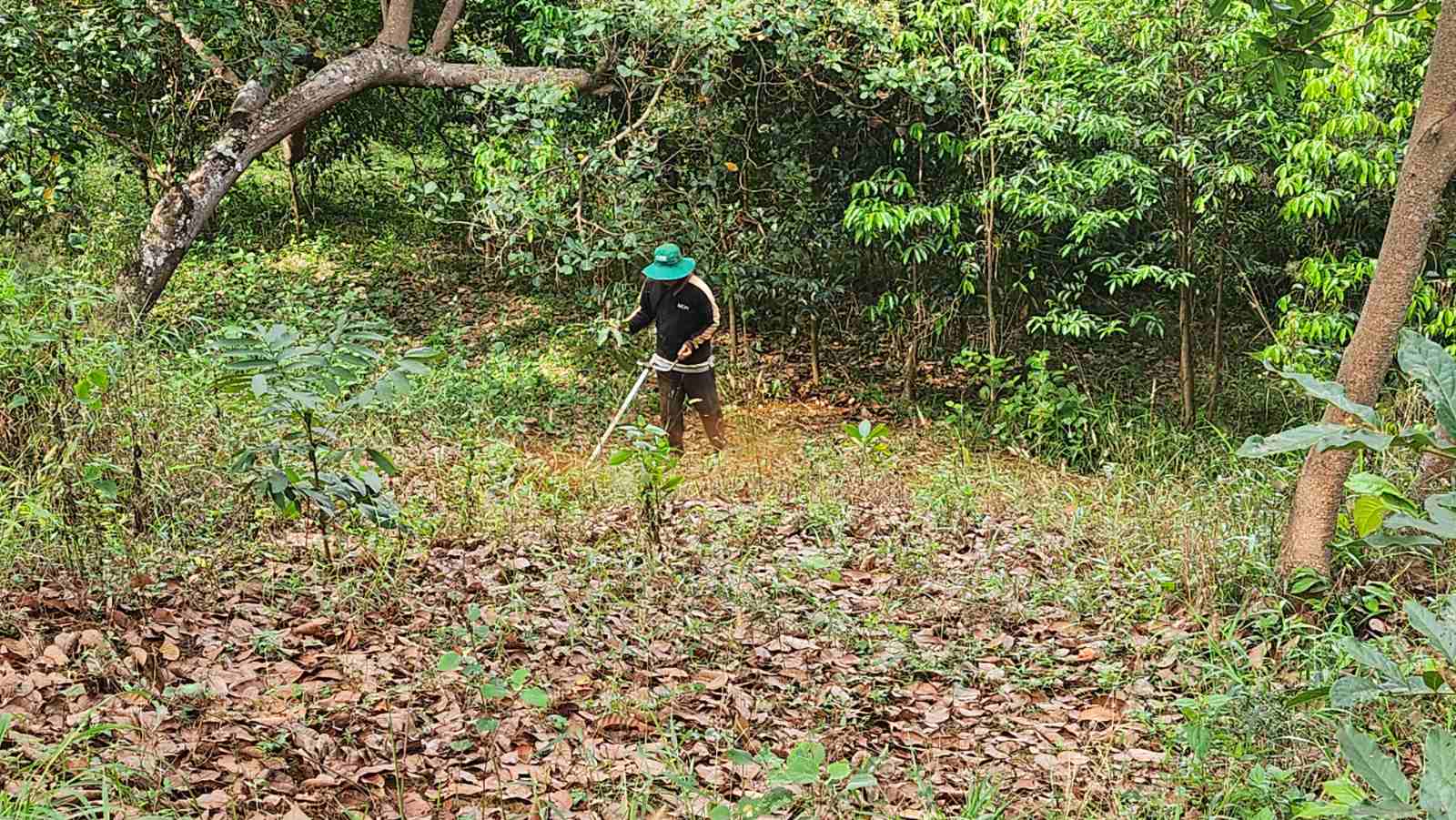
Fig. 3: Weed control by cutter
Irrigation: Cashew trees are primarily rainfed crops. Where irrigation is available, it is most valuable during the critical window of cashew flowering and early fruit development — typically coinciding with dry season conditions in Vietnam.
Fertilizing: Cashew trees tolerate low-input conditions, but they respond well to appropriate nutrition. In organic systems, manure and wood ash provide practical, accessible nutrient sources that improve tree condition without chemical inputs. Building soil fertility through composting — as Target Agriculture's Field Officers support farming communities to do — creates a long-term nutritional foundation that purchased inputs cannot replicate.
👉 Watch more How Target Agriculture's field officer guide farmers making compost
Pruning: Pruning stimulates new growth, maintains productive canopy structure, and provides a critical opportunity for disease and pest management. Removing diseased or parasite-affected branches reduces pressure on the tree and improves light penetration into the canopy. The optimal time for major pruning is immediately after harvest season.
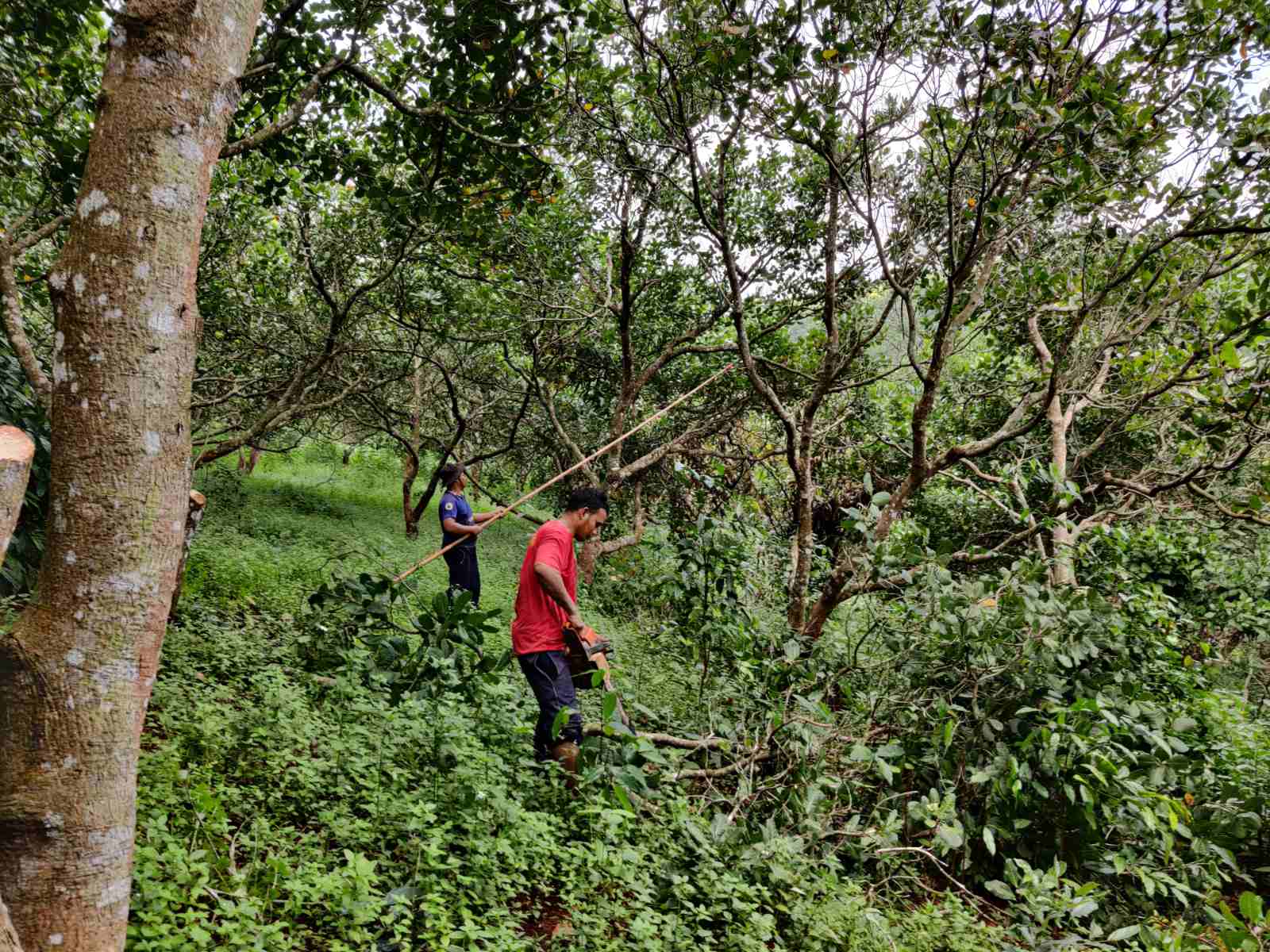
Fig. 4: Prune after harvest season.
Fencing is consistently undervalued in cashew orchard planning — but damage from large animals can be significant, particularly in the establishment years when young trees are most vulnerable.
Beyond animal exclusion, strategic use of living fences made from dense-growing shrubs or trees — such as agarwood — provides additional protection against chemical drift from neighboring non-organic plots, a genuine concern for farms seeking or maintaining organic certification.
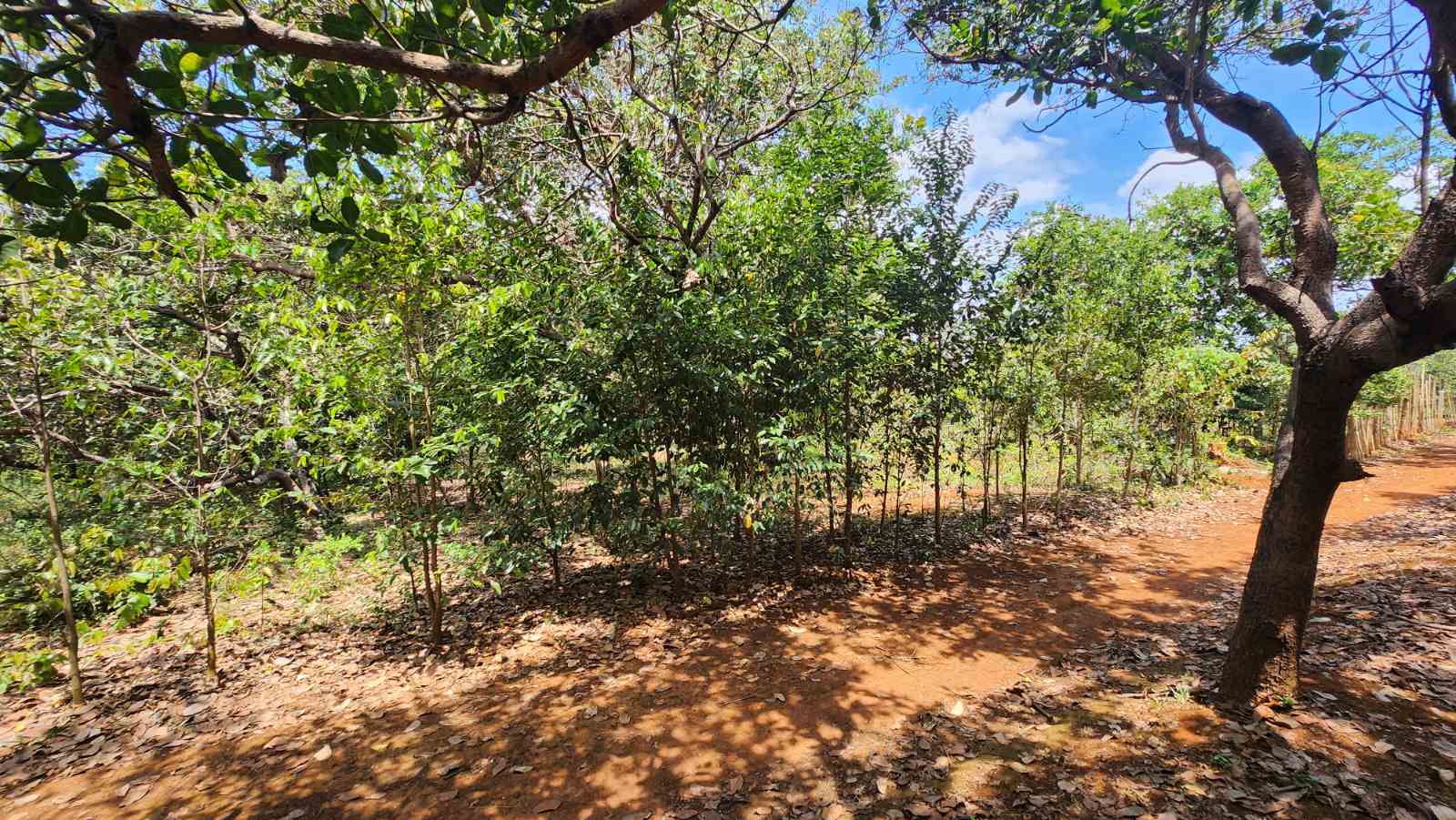
Fig. 5: A fence made of agarwood trees.
Growing organic cashews well is not complicated. But it is deliberate. Every step — from hole preparation and seed selection, through planting density and intercropping design, to weed management and pruning timing — represents a decision that compounds over the 25–30 year productive life of the orchard.
At Target Agriculture Vietnam, our Field Officers work alongside farming families to make these decisions well — building the organic cashew supply chain from the ground up, one orchard at a time.
👉 Learn more about Target Agriculture's organic cashew farming practices and supply chain at target-agriculture.com
 YOUTUBE - LINKEDIN