


Think USDA Organic and EU Organic are the same? For organic cashew farm-to-table buyers, understanding the differences can help you avoid compliance risks, streamline imports, and make smarter supplier decisions.
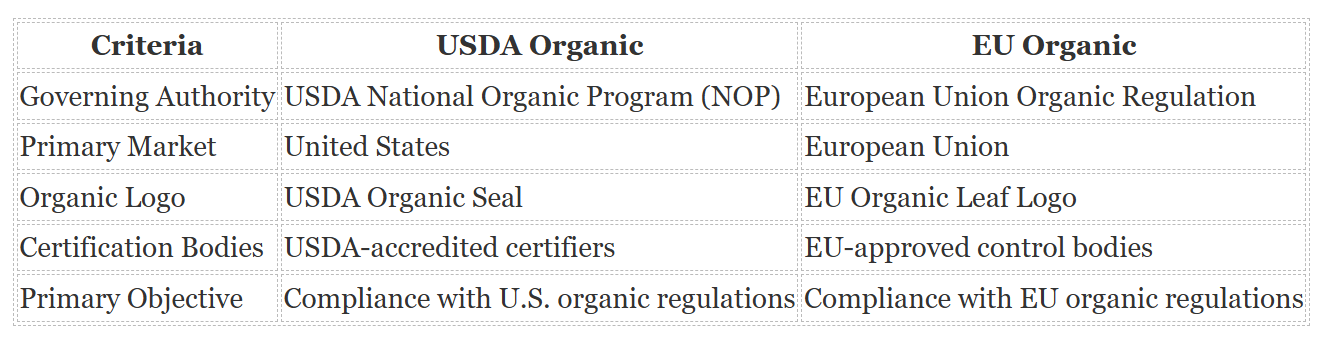
- USDA Organic and EU Organic share the same mission but operate under different regulatory systems and target different markets.
- USDA Organic is required for the U.S. market; EU Organic is required across the European Union.
- Choosing the wrong certification can cause compliance risks, shipment delays, or limited market access.
- Certification proves compliance at a point in time — traceability proves it's maintained throughout the supply chain.
- Target Agriculture's Organic Cashew Farm-to-Table approach combines both certifications with full traceability for global buyers.
As the global organic food market continues to expand, organic certification has become more than a marketing claim. It serves as evidence that products are produced under controlled agricultural practices, supported by transparent documentation, quality management systems, and full traceability.
Among the world's most recognized organic standards, USDA Organic and EU Organic share the same mission: promoting environmentally responsible farming while providing safe, high-quality products for consumers.
Despite these similarities, each certification operates under a different regulatory framework and is designed to meet the requirements of specific markets. Understanding these distinctions helps buyers make informed sourcing decisions and avoid unnecessary compliance risks.
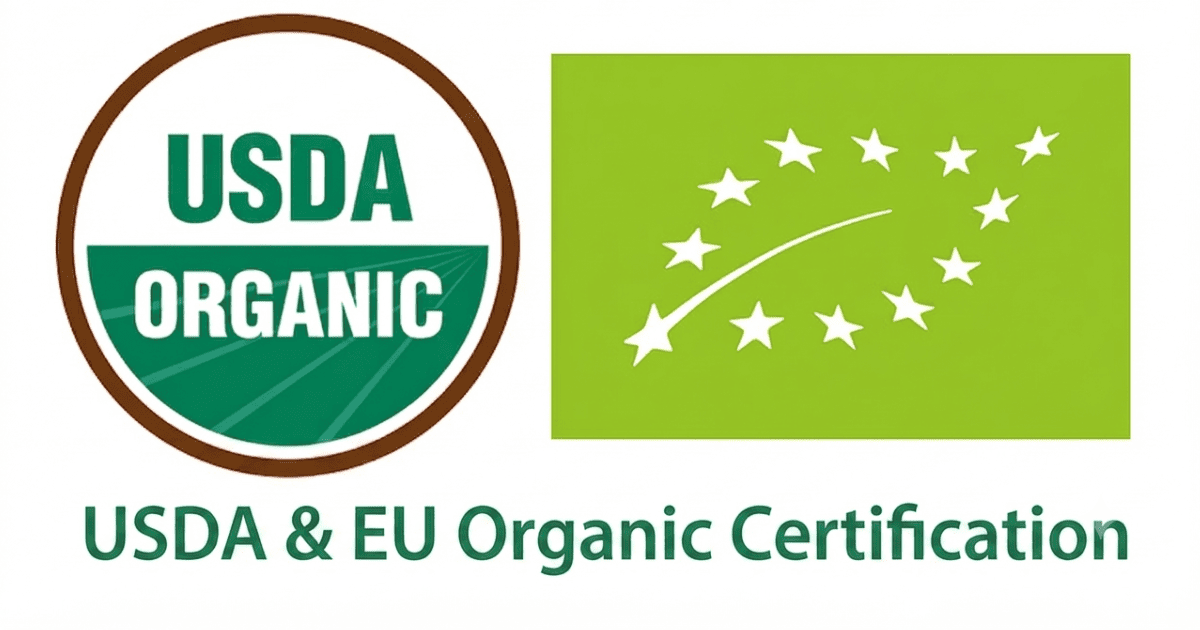
USDA Organic
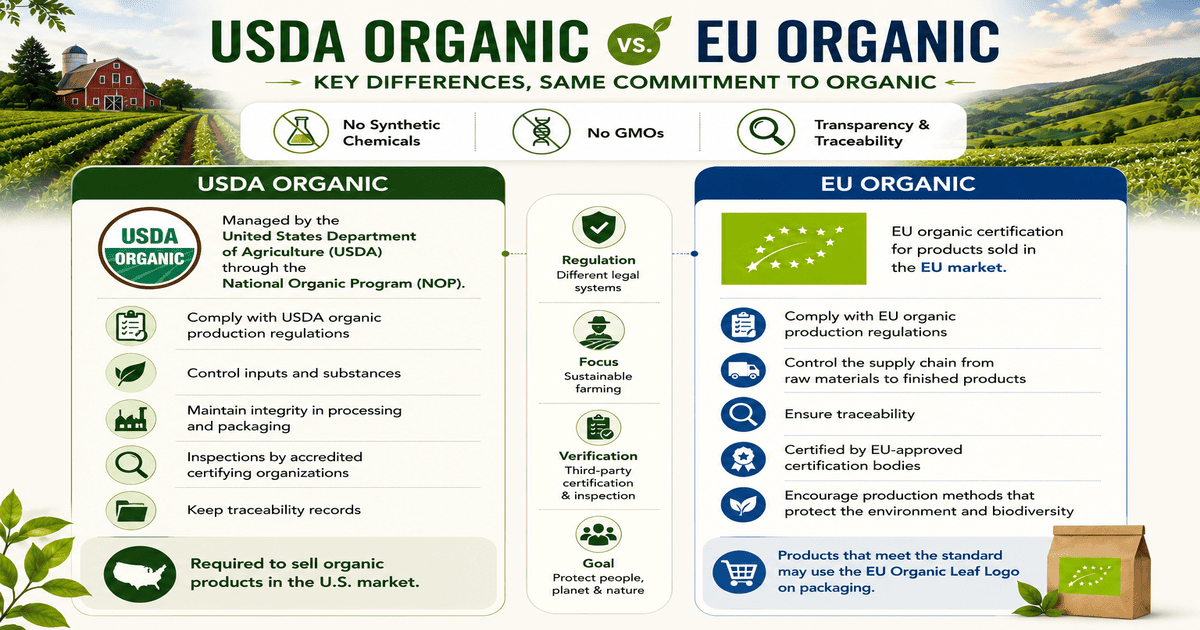
USDA Organic is administered by the United States Department of Agriculture (USDA) through the National Organic Program (NOP).
To achieve USDA Organic certification, producers and processors must:
- Comply with USDA NOP organic production standards.
- Strictly control approved inputs and raw materials.
- Preserve organic integrity throughout processing, storage, and packaging.
- Pass regular inspections conducted by USDA-accredited certification bodies.
- Maintain complete documentation and traceability records.
For exporters targeting the U.S. market, USDA Organic certification is often an essential requirement.
EU Organic
EU Organic is the official organic certification system for products marketed within the European Union.
Its requirements include:
- Compliance with EU organic production regulations.
- Full control of the supply chain from farm to finished product.
- Comprehensive traceability throughout production.
- Certification by EU-approved control bodies.
- Farming practices that promote biodiversity and environmental sustainability.
Products meeting these standards are eligible to display the EU Organic Leaf Logo, providing consumers with confidence in product authenticity.
Knowing what each standard requires is only useful once a buyer understands what's actually at stake in choosing between them.
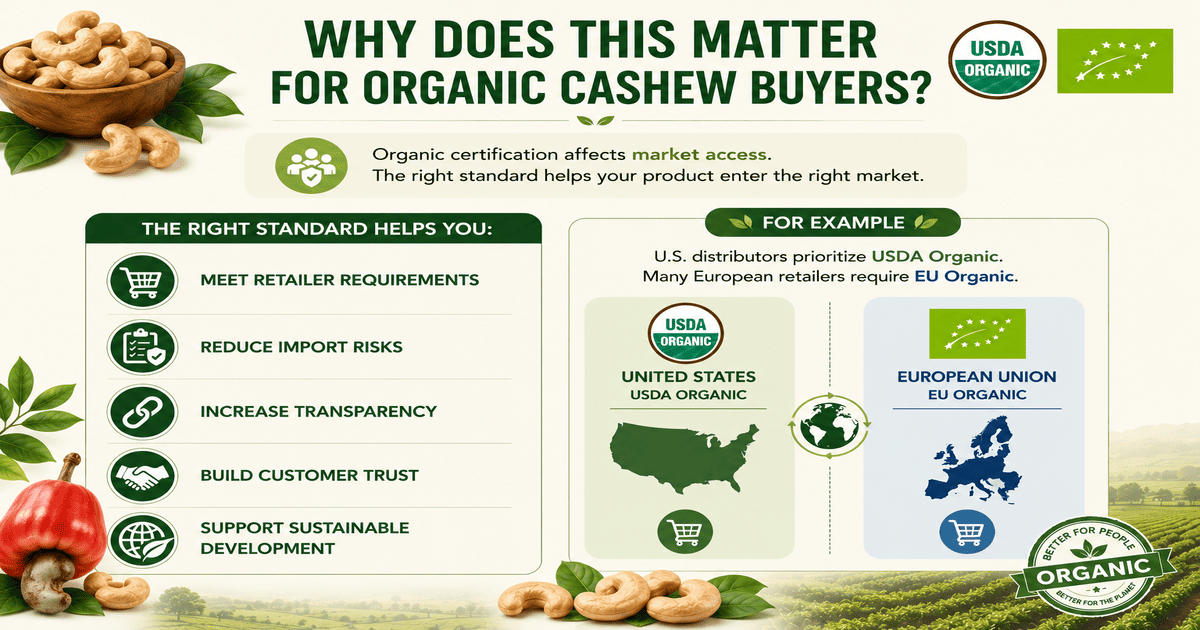
Organic certification is far more than a label on product packaging—it determines whether products can legally enter certain markets and meet retailer requirements.
For importers, distributors, and private-label brands, understanding certification requirements helps:
- Meet regulatory and retailer expectations.
- Reduce customs and import compliance risks.
- Improve supply chain transparency.
- Strengthen customer confidence.
- Support long-term sustainability objectives.
For example, distributors supplying the U.S. market generally prioritize USDA Organic certification, while retailers across Europe typically require products certified under the EU Organic standard. Selecting the right certification from the beginning helps businesses avoid unnecessary costs while ensuring smoother international trade.
Certification demonstrates compliance at a specific point in time. Traceability proves that compliance is maintained throughout the entire supply chain. At Ziellandwirtschaft, every stage—from sourcing raw cashews and processing to packaging and export—is managed through documented quality control procedures designed to ensure consistency and transparency.
Our Organic Cashew Farm-to-Table approach enables customers to verify product origins, monitor quality throughout production, and build confidence in long-term sourcing partnerships. As global expectations around ESG, food safety, and supply chain transparency continue to increase, traceability has become a significant competitive advantage—not just an added benefit.
USDA Organic and EU Organic share the same objective of promoting sustainable agriculture, but they operate under different regulatory frameworks and serve different market requirements. Understanding these differences allows importers and food brands to reduce compliance risks, choose the right certification strategy, and build stronger, more resilient supply chains.
At Ziellandwirtschaft, we combine internationally recognized organic certifications with responsible sourcing, rigorous quality management, and complete farm-to-export traceability to deliver premium Vietnamese organic cashews to customers worldwide.
 YOUTUBE - LINKEDIN