



Cashew trees have a reputation for toughness. Here's what 2026 research actually says about their weather resilience.
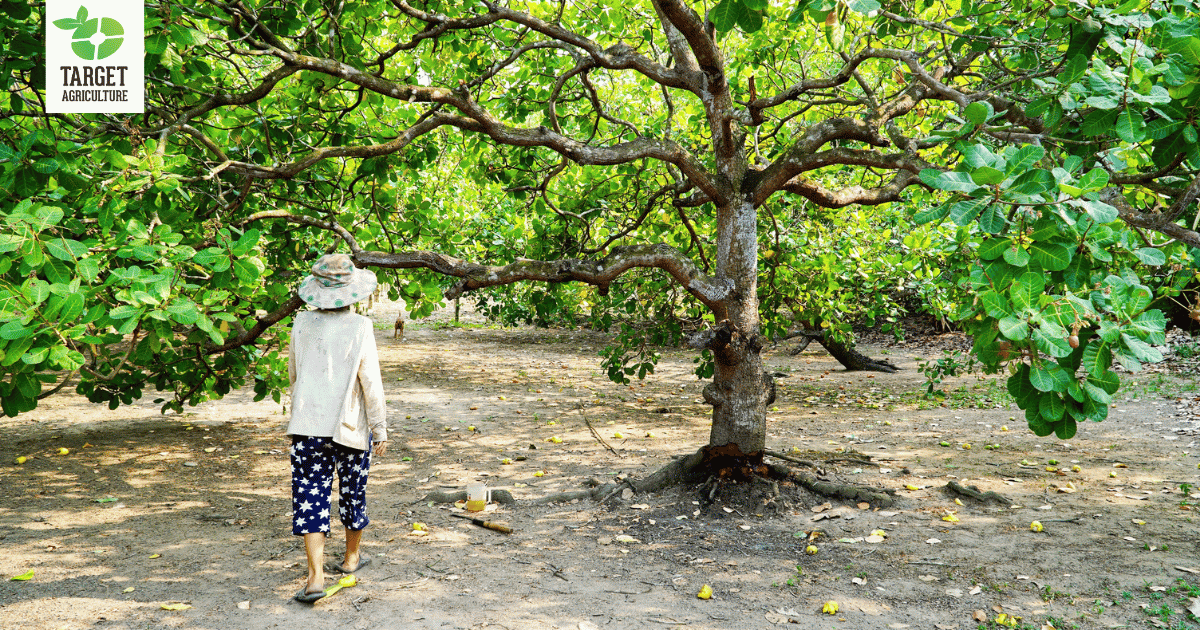
Cashew trees have a reputation for toughness. Here's what 2026 research actually says about their weather resilience — and where it ends.
Ask anyone in the cashew trade whether the tree can handle tough conditions, and you'll get a confident "yes." Cashew orchards famously thrive on sandy coastlines, drought-prone savannas, and soils too poor for most other crops. But is that reputation backed by science, or just industry folklore?
The toughness isn't just marketing copy. Cashew trees (Anacardium occidentale) develop deep taproots that reach moisture far below the surface, along with thick, waxy leaves that reduce water loss — traits that let them establish in dry, sandy, nutrient-poor soils where many crops fail.
A 2026 study in Scientific Reports evaluated 17 cashew varieties under drought stress and found tolerant genotypes actively regulate antioxidants and hormones like abscisic acid to protect nut yield under water stress — drought tolerance here isn't passive survival, it's an active biological response.
Field data backs this up: in Ghana's Savannah zone, 71% of surveyed farmers reported cashew trees were less affected by climate variability than staple crops (Discover Sustainability, Springer Nature). The FAO has called cashew a "climate resilience hero" for smallholder farmers — and the evidence supports it, at least against drought and poor soil.
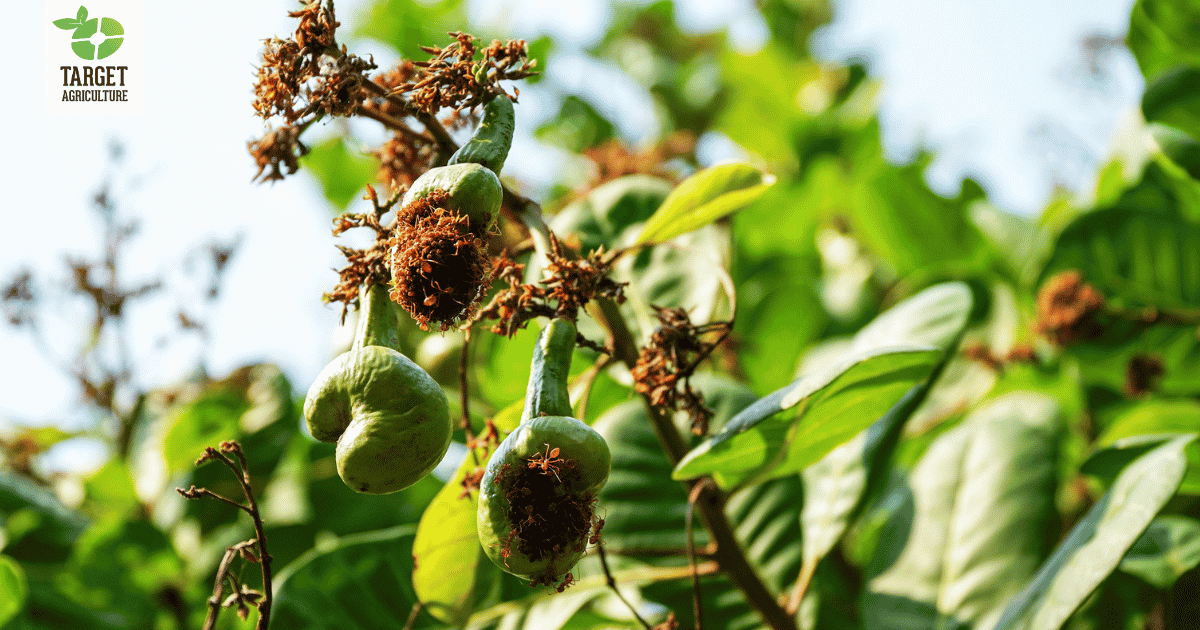
That resilience doesn't cover every kind of stress.
Frost and waterlogging are hard limits. Cashew is a strictly tropical species with essentially no frost tolerance — even brief freezing exposure can damage flowers and young trees. And the same deep roots that make cashew drought-hardy become a liability in waterlogged, poorly drained soil, which starves them of oxygen and causes root rot. Resilient against too little water doesn't mean tolerant of too much.
Flowering and fruiting are the real vulnerability window. Unseasonal rain and heavy dew during flowering can trigger flower drop and poor fruit set, while humid, cloudy conditions favor pests and disease. From January to May in many regions, cashew trees face significant moisture stress right when flowering and fruit development are underway.
Wind is a mixed picture. Cashew's canopy and root system help stabilize soil and reduce erosion at the landscape level. But the tree itself doesn't thrive in wind — strong or salt-laden gusts during flowering still cause flower and young fruit drop.
So the honest answer: yes, structurally, against drought and poor soil — but not against cold, standing water, or storm-force wind during flowering.
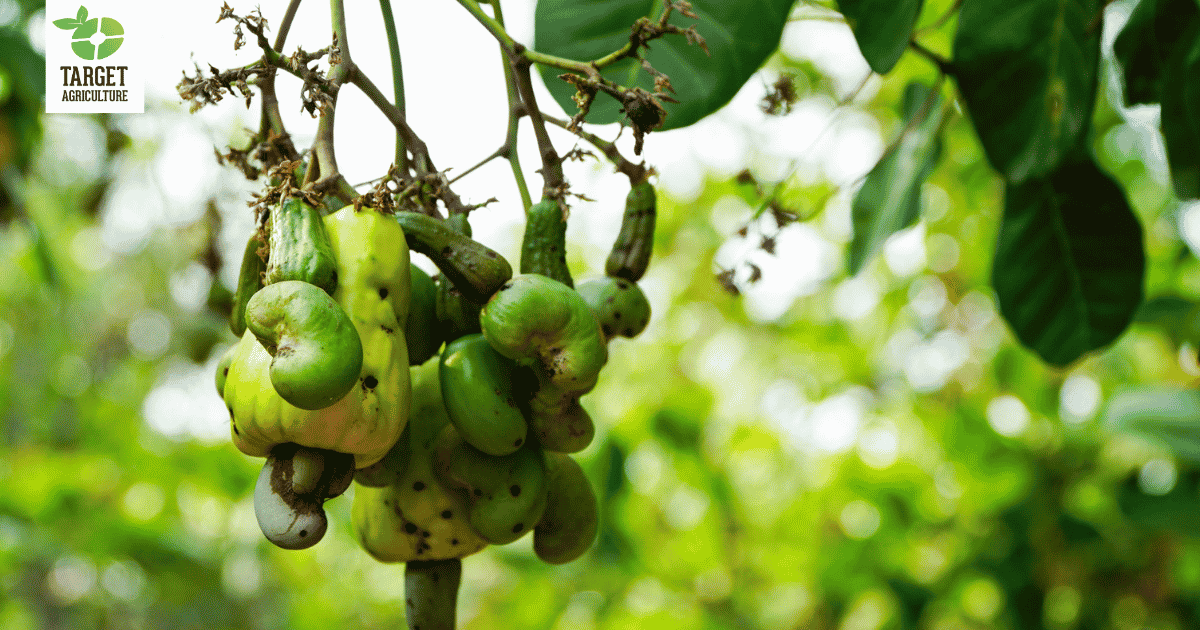
A tree's ability to survive doesn't guarantee a stable, high-quality harvest. This is part of why climate volatility can still disrupt supply even from regions known for hardy cashew cultivation — and why on-the-ground farm management remains essential even when the crop itself is naturally tough.
At Target Agriculture, our field team works directly with cooperatives across Binh Phuoc to monitor conditions through the flowering and fruiting window specifically — because that's where attentive farm management makes the biggest difference, not just during the dry season when the tree can largely fend for itself.
Cashew trees earn their reputation for toughness — but understanding exactly where that resilience holds, and where it doesn't, separates a supplier who repeats the folklore from one who actually manages around it.
At Target Agriculture, our field team works directly with cooperatives across Binh Phuoc to support crops through the flowering and fruiting window specifically — where attentive management makes the real difference.
👉 Contact Target Agriculture to learn more about how we support resilient, sustainable organic cashew cultivation from farm to export.
 YOUTUBE - LINKEDIN