


Most cashew buyers have seen W180, W240, W320 on a spec sheet. Few understand what the difference actually costs — and why choosing the wrong grade is more expensive than the price gap suggests.

The "W" in cashew grading stands for "Whole" — as in, a whole, unbroken kernel. The number that follows indicates how many whole kernels fit into one pound (approximately 453g). The lower the number, the larger the kernel.
This means:
- W180 = up to 180 kernels per pound → the largest, most premium grade
- W240 = up to 240 kernels per pound → large, high-value grade
- W320 = up to 320 kernels per pound → the most widely traded grade globally
- W450 = up to 450 kernels per pound → smaller kernels, value grade
The grading system is standardized across the global cashew trade, governed by the AFCA (African Cashew Alliance) and adopted by major importing markets in Europe, the US, and Asia. When a buyer specifies W320, every supplier — from Vietnam to Ivory Coast — works to the same kernel count benchmark.
Grade is determined at the processing stage, during sorting and grading after shelling and peeling. The distribution of grades from any given batch of raw cashew nuts depends on:
- Raw nut size — larger raw nuts produce a higher proportion of premium grades
- Processing precision — poor shelling technique increases breakage, reducing whole kernel yield
- Raw material origin — growing region, soil quality, and harvest maturity all affect kernel density and size
This is why Binh Phuoc province in Vietnam consistently produces cashews with a strong W240 and W320 yield. The region's soil conditions, combined with long-established cultivation practices, result in raw nuts with above-average kernel fill — a characteristic that experienced buyers specifically seek out.
For certified organic cashew exporters in Vietnam, maintaining grade consistency across shipments requires controlling the entire chain: from which farms supply raw nuts, to how shelling equipment is calibrated, to how final grading is conducted before packing.
The answer depends entirely on your end application — and understanding the trade-offs is what separates buyers who get value from those who overpay or underbuy.
- W180 — Premium and Specialty
The largest cashew kernel. Used in premium retail packs, luxury gifting, and high-end hospitality. Visually striking and commands the highest price per kilogram. Demand is consistent but volume is limited — W180 kernels represent a small proportion of total yield.
- W240 — High-Value Retail
The sweet spot for premium retail positioning. Large enough to make an impression in a clear-window pack, priced below W180 but still carrying significant retail margin potential. Increasingly sought after by European organic retailers for branded premium lines.
- W320 — The Global Standard
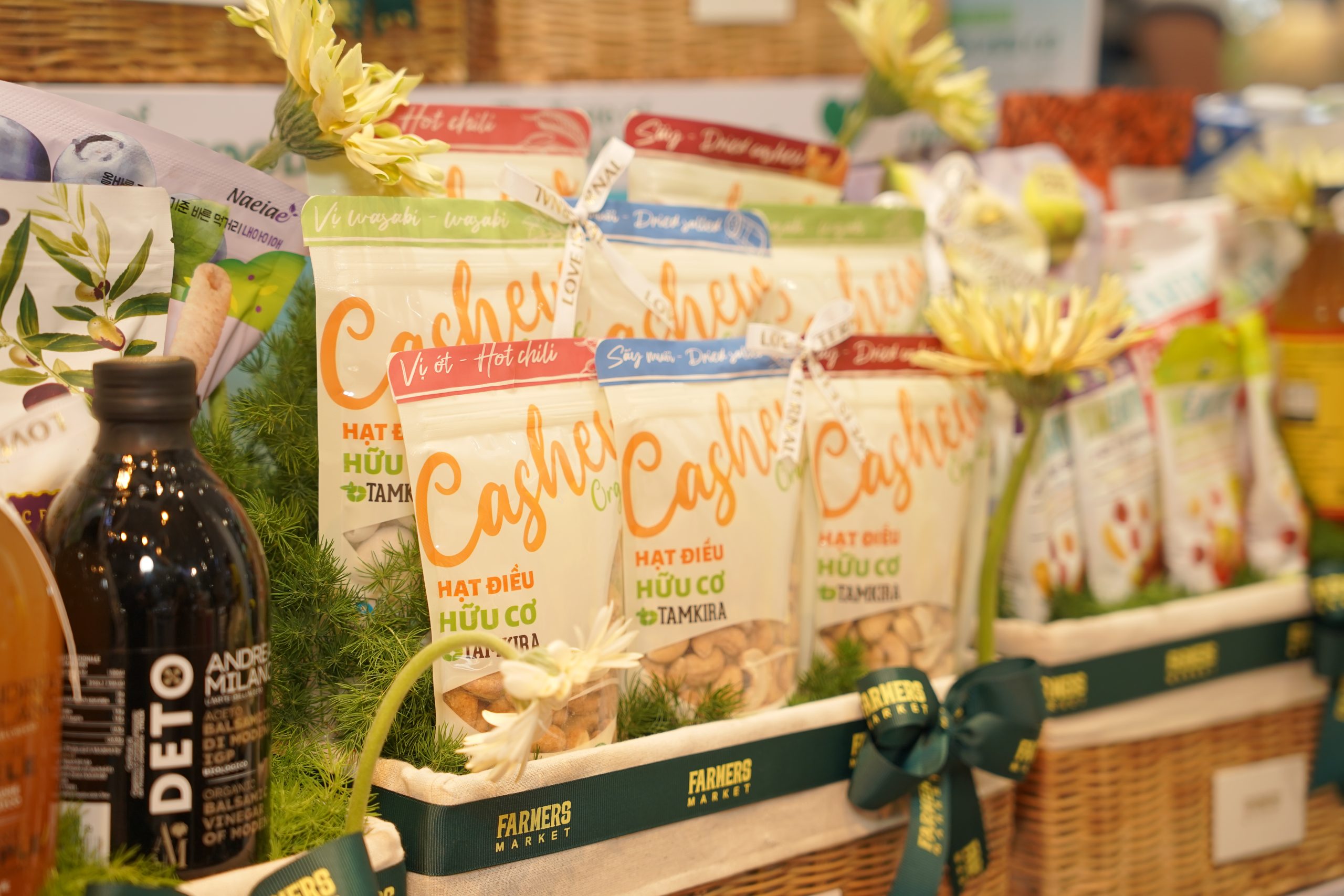
The most widely traded cashew grade in the world. Versatile across retail snack packs, food service, confectionery, and food manufacturing. For most buyers entering the organic cashew market, W320 is the natural starting point — reliable supply, competitive pricing, and broad market acceptance.
- W450 and Broken Grades (SP, LP, BB)
Smaller whole kernels and split/broken variants. Primary use in food manufacturing — cashew butter, confectionery inclusion, and ingredient applications where visual appearance is secondary to cost efficiency.
The most common mistake buyers make is focusing exclusively on grade selection without asking a harder question: can this supplier deliver that grade consistently across every shipment?
Grade drift between orders is one of the most frequent sources of dispute in cashew trade. A supplier who ships W320 in the sample and W450 in the container has not met the specification — regardless of what the invoice says.
At Target Agriculture Vietnam, grade consistency is managed through:
- Standardized raw material intake from certified organic farms in Binh Phuoc
- Calibrated shelling and sorting equipment maintained to reduce kernel breakage
- Lot-by-lot grading records linked to the batch traceability system
- Final pre-shipment inspection against buyer-approved reference samples
The result is that what buyers approve in the sample is what arrives in the container — documented, traceable, and repeatable across orders.
👉 Watch more video about the cashew processing and grading process at Target Agriculture's factory.
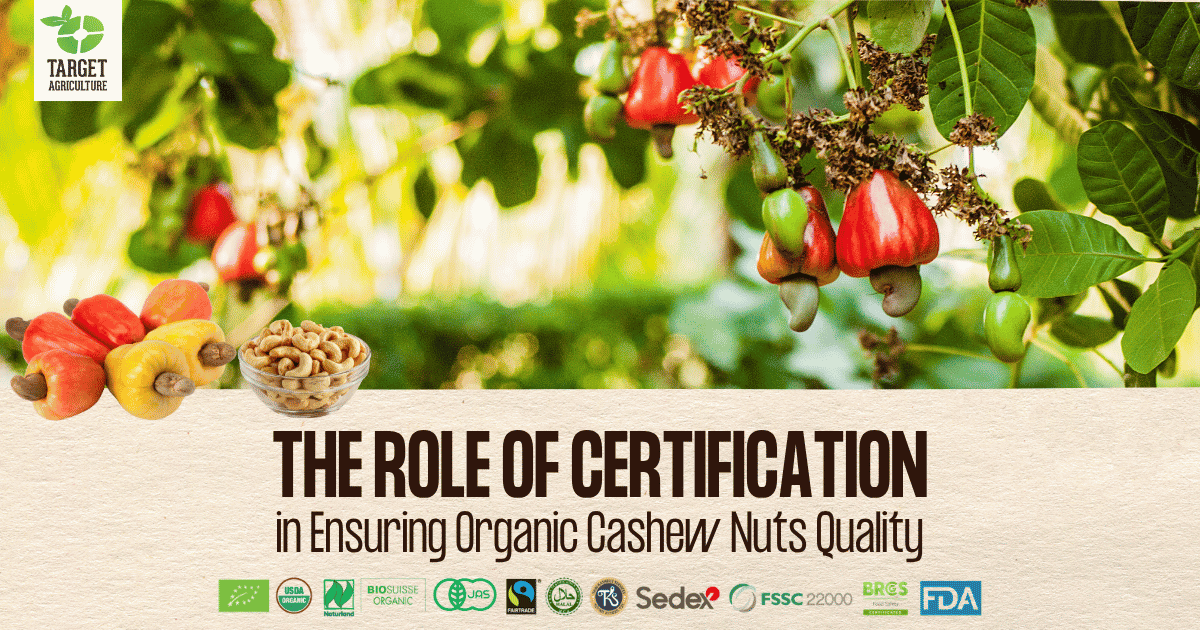
For buyers sourcing certified organic cashew kernels, grade is only one dimension of the specification. The other is the certification stack that validates how the cashew was grown, processed, and packaged.
At Target Agriculture, every grade of organic cashew kernel — from W180 to W450 — is available under the same certified supply chain:
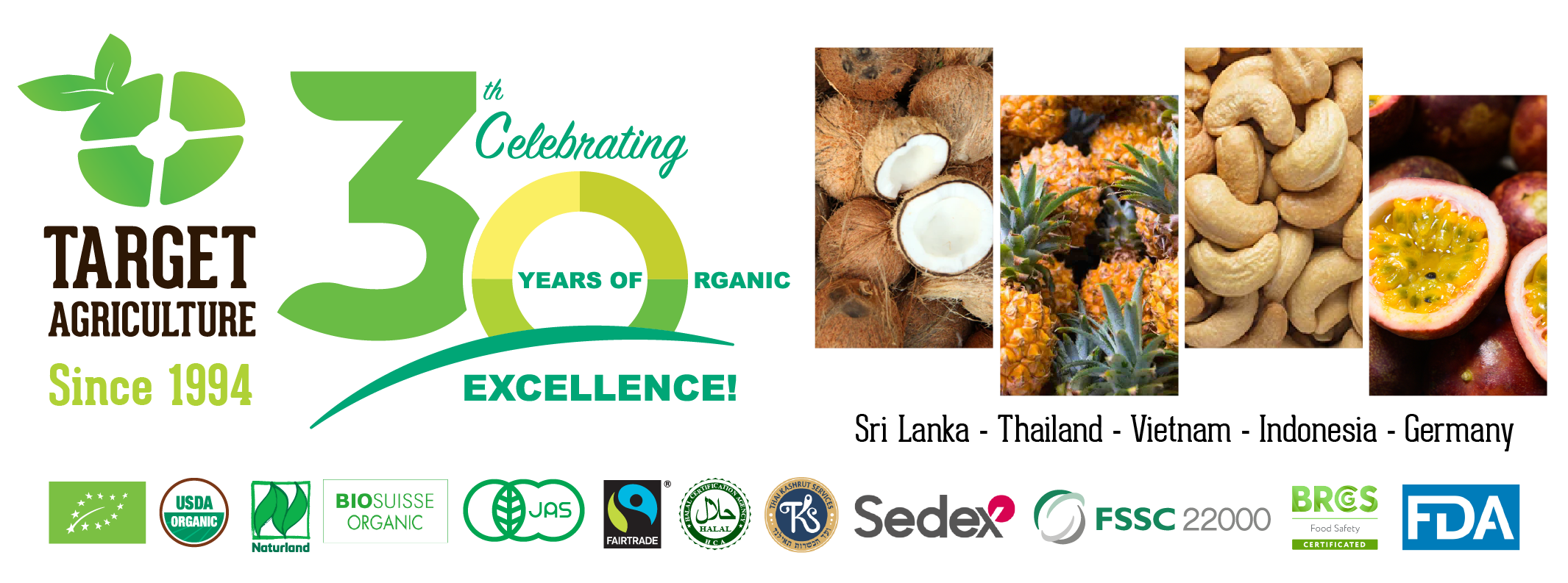
EU Organic · USDA-NOP · JAS · Naturland · Fairtrade · BRC · SMETA · Halal · Kosher
This means a buyer sourcing W320 organic cashews for a German supermarket private label and a buyer sourcing W180 for a US premium snack brand are drawing from the same Binh Phuoc supply chain — with the same origin documentation, the same audit trail, and the same quality assurance protocols.
Cashew grades are not complicated — but the decisions around them matter more than most buyers initially realize. Choosing the right grade for your end application, and sourcing from a supplier who can deliver it consistently, is what determines whether your cashew procurement creates value or creates problems.
Target Agriculture Group exports certified organic cashew kernels across all major grades from its Vietnam operations — with full traceability, grade-specific documentation, and the certification coverage to access the most regulated retail markets in the world.
👉 Request grade specifications, product samples, or certification documentation from Target Agriculture.
 YOUTUBE - LINKEDIN