A Certificate of Analysis is more than a laboratory report. Learn six practical checks to help you verify product information, interpret results, and make informed cashew purchasing decisions.
When sourcing cashew kernels internationally, buyers often receive a Certificate of Analysis (COA) before approving a shipment. However, receiving a laboratory report does not automatically mean that the product meets every purchasing requirement.
For importers, food manufacturers, and quality assurance teams, reviewing a COA means checking not only the reported results but also the product identity, agreed specifications, analytical methods, and sample representativeness.
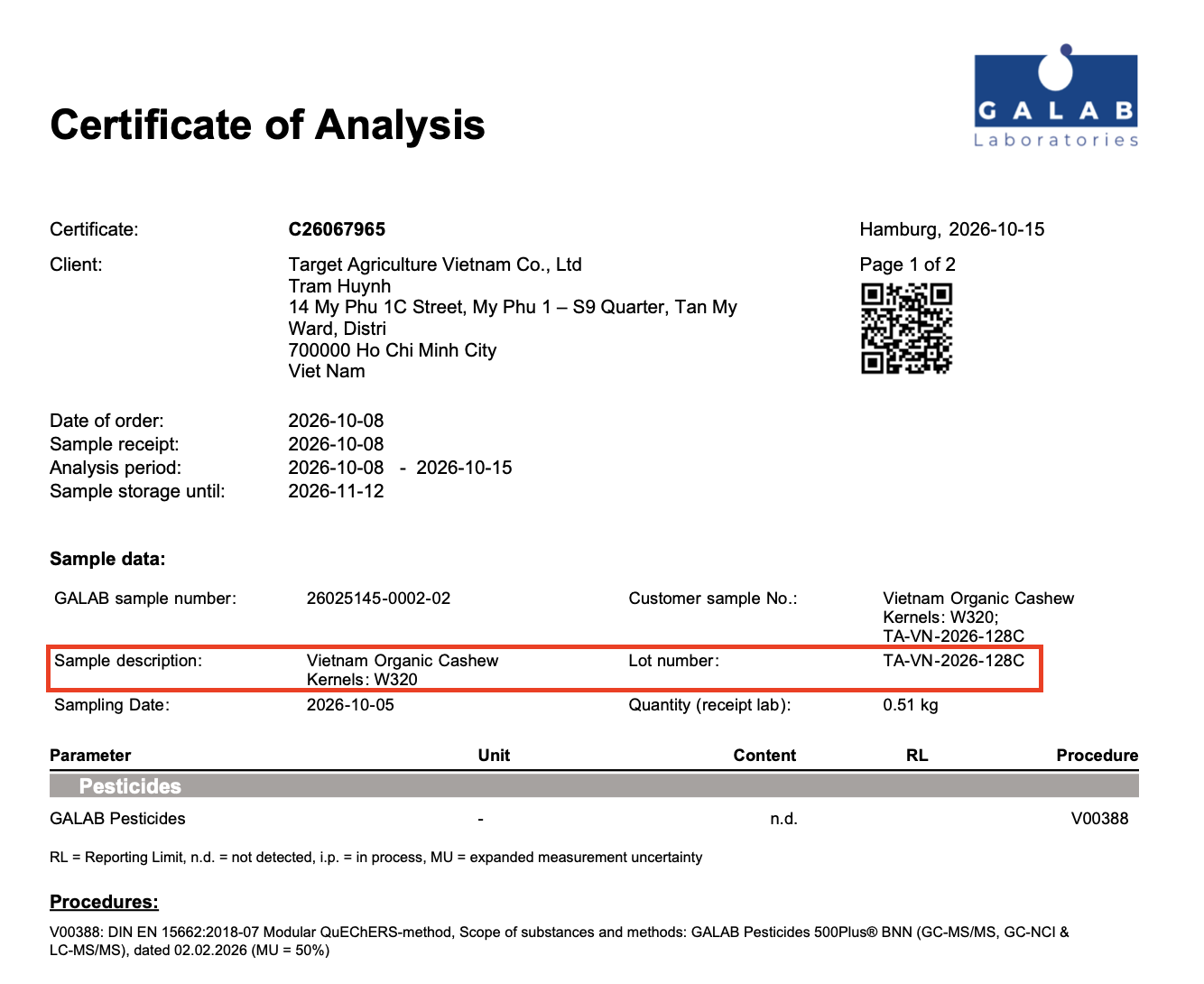
Start by checking the product name, grade, lot number, sample identification, and relevant dates. These details should correspond to the product and shipment under review.
For example, a COA issued for cashew kernels W320 should not automatically be used to approve a shipment of W240 unless the document clearly covers both products under an agreed arrangement.
If the lot number on the COA differs from the commercial invoice or packing list, ask the supplier to clarify the discrepancy before proceeding.
A correct analytical result is only useful when it can be linked to the right product and lot.
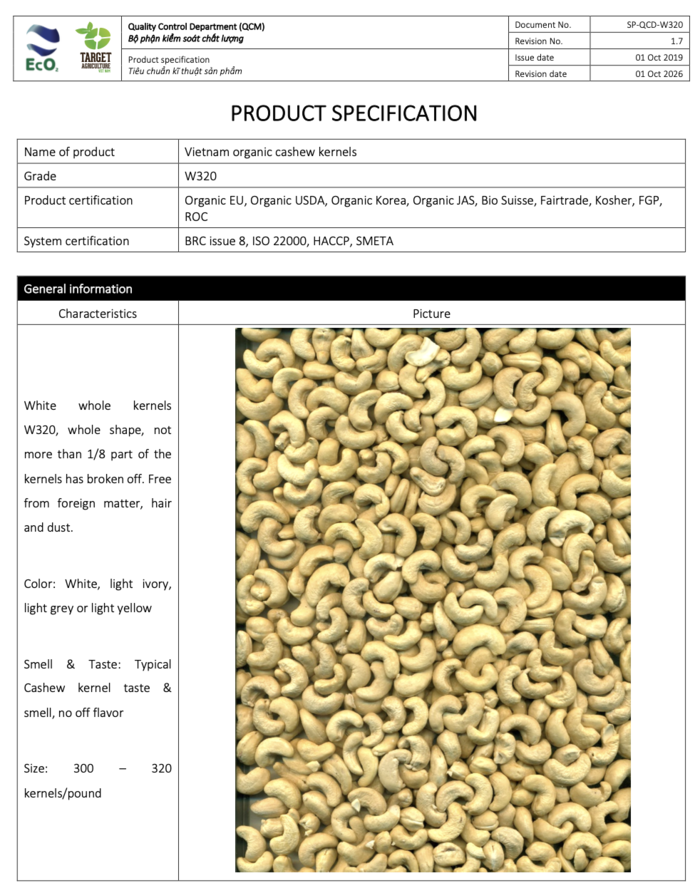
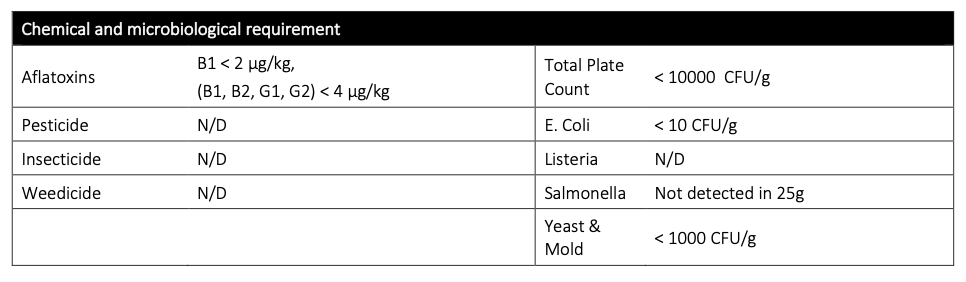
A COA presents analytical findings, while a product specification defines the requirements agreed between the buyer and supplier.
For example, if a specification establishes an acceptable moisture range, the buyer should compare the reported moisture result against those limits rather than assess the number in isolation.
Always confirm that the correct specification version is being used and that it applies to the product being purchased.
A laboratory report may provide analytical results without formally confirming that the entire shipment complies with contractual requirements. Buyers should understand this distinction when making approval decisions.
Analytical results are meaningful only when their units and reporting conventions are understood.
A result expressed in mg/kg cannot be compared directly with a result expressed in µg/kg without conversion. Similarly, a numerical result should not be interpreted without checking the method's reporting limits.
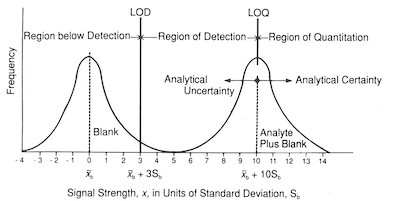
Three common terms deserve attention:
- ND (Not Detected): The substance was not detected according to the method's detection and reporting criteria.
- LOD (Limit of Detection): The lowest level at which the method can reliably detect the substance.
- LOQ (Limit of Quantification): The lowest level at which the method can quantify the substance with acceptable performance.
For instance, “ND, LOQ 0.01 mg/kg” does not establish that the substance is completely absent. It indicates that no quantifiable result was reported under the stated analytical conditions.
When comparing two reports, buyers should check whether the laboratories used comparable methods and reporting limits.
Check the laboratory's name, analytical method, report reference number, and relevant accreditation details.
If testing is outsourced, buyers can ask whether the laboratory is accredited to ISO/IEC 17025 for the relevant testing activity. Accreditation does not necessarily cover every test performed by that laboratory, so the specific method and parameter may need verification.
Understanding these details helps buyers assess the analytical evidence and recognize its limitations.
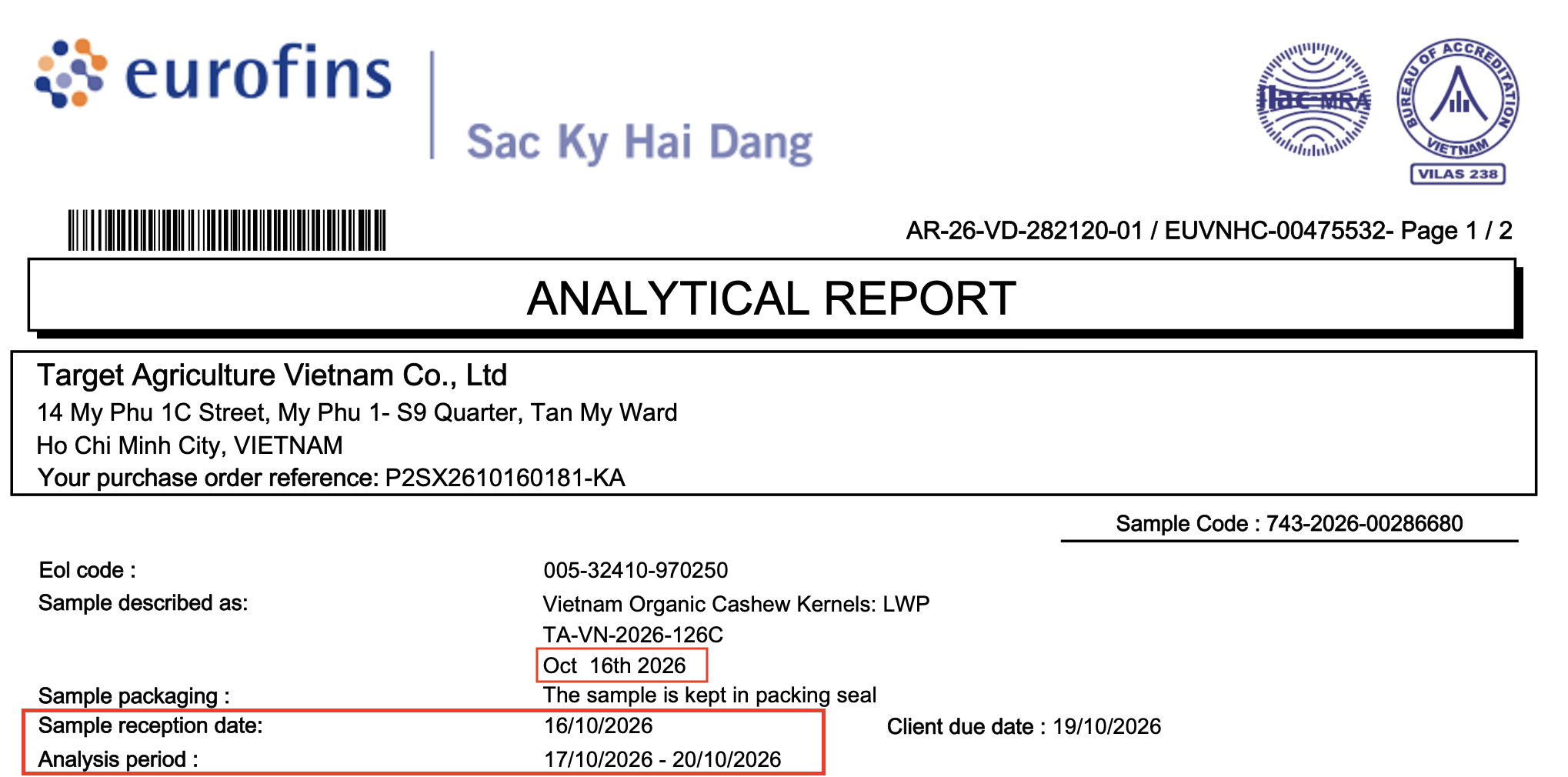
A laboratory analyzes a sample, not every kernel in a shipment. Consequently, the reliability of the result depends partly on whether the sample adequately represents the lot.
Review the sampling date, testing date, report issue date, and available sampling information. An analytical report for an earlier production batch may not represent a later shipment.
If the sample identification or collection procedure is unclear, request clarification before relying on the results for shipment approval.
A consistent review procedure helps buyers avoid relying solely on individual judgment. A practical checklist should cover lot identification, specification matching, units, reporting limits, laboratory details, and sampling information.
At Target Agriculture Group, quality control involves reviewing analytical results against product specifications and customer requirements. Linking laboratory documentation to the correct production lot supports traceability and helps teams investigate discrepancies when they arise.
A COA should therefore be treated as a decision-making tool rather than simply another document required before shipment.
Looking for a Vietnam cashew supplier that understands your quality documentation requirements? Contact Target Agriculture to discuss your product specifications and export sourcing needs.
 YOUTUBE - LINKEDIN