Cashew vacuum packaging and nitrogen flushing help protect cashew kernels from oxygen exposure and quality deterioration during international shipping. Discover how vacuum sealing, Modified Atmosphere Packaging (MAP), and suitable packaging formats support bulk cashew exports and B2B sourcing requirements.
As an organic cashew exporter in Vietnam, Target Agriculture Group works with B2B buyers to support cashew sourcing and export requirements. Packaging specifications should be matched to the product grade, shipment format, destination market, and buyer's technical requirements.
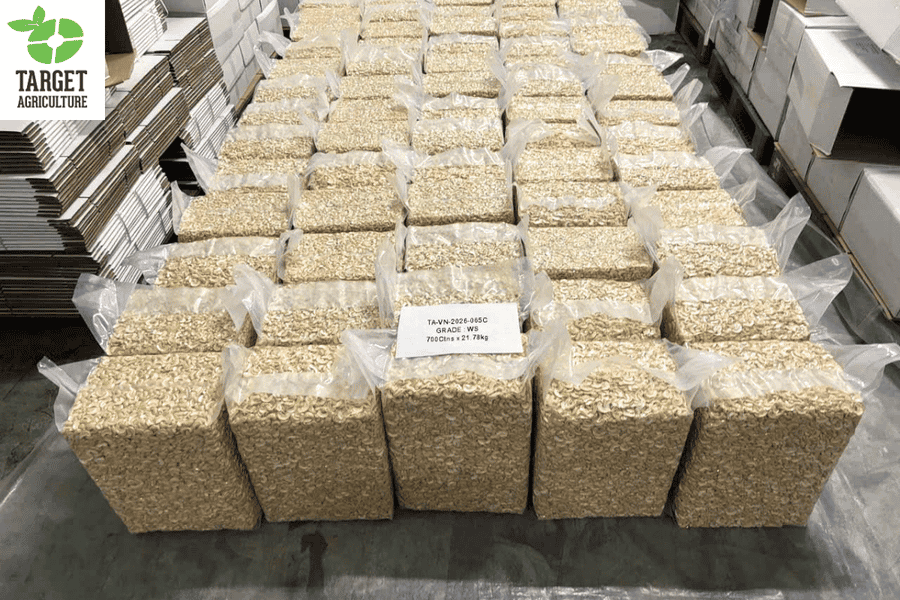
Cashew kernels contain natural fats that can deteriorate when exposed to oxygen over time. Temperature fluctuations, moisture exposure, damaged seals, and unsuitable storage conditions can also affect product quality during transport.
For importers, common packaging-related concerns include:
- Lipid oxidation: Oxygen exposure can contribute to rancidity, off-odors, and changes in flavor.
- Moisture exposure: Moisture ingress may affect kernel texture and stability and, under unsuitable conditions, increase the risk of microbial deterioration.
- Packaging damage: Punctures, weak seals, or rough handling can compromise the protective packaging environment.
- Insect and foreign-material risks: Packaging is one part of a broader prevention system and should complement appropriate inspection, sanitation, and pest-management procedures.
The right packaging solution depends on the product, the expected shipping and storage conditions, and the level of protection required. Vacuum sealing or nitrogen flushing can help manage oxygen exposure, but neither should be treated as a substitute for appropriate processing, hygiene, and quality-control measures.
For buyers comparing product grades and sourcing options, explore Target Agriculture's cashew products.
Packaging material selection is an important part of export planning. The material must be suitable for direct food contact, compatible with the selected sealing process, and sufficiently robust for packing, handling, and transportation.
Depending on the packaging design, buyers may consider the following characteristics:
- Food-contact suitability: Packaging materials should have documentation appropriate to the intended food-contact application and destination market.
- Mechanical strength: Appropriate puncture and tear resistance helps reduce the risk of damage during handling and transit.
- Sealing performance: The material must be compatible with the sealing equipment and able to maintain an effective seal under expected conditions.
- Barrier properties: Oxygen and water-vapor barrier performance should be evaluated against the product's shelf-life requirements. A material's appearance alone does not establish its barrier performance.
- Inspection and handling: Transparent packaging may help with visual inspection where the selected material and packaging format allow it.
Polyethylene (PE) is used in many food-packaging applications. However, the suitability of a particular PE bag depends on its composition, thickness, construction, intended use, and supporting technical documentation.
Buyers should request relevant packaging specifications and food-contact compliance documents rather than relying on a generic claim that a material meets every market's requirements.

Vacuum sealing and nitrogen flushing are related but distinct packaging techniques. The most appropriate method depends on the desired residual gas conditions, packaging materials, machinery, and product specifications.
Vacuum packaging removes much of the air from a package before sealing. Reducing the amount of oxygen surrounding the kernels can help limit oxidative deterioration, provided that the packaging remains intact and the other storage conditions are suitable.
The packaging film must withstand the vacuum process without compromising the product or seal. Buyers should also consider how the kernels respond to pressure and handling during packing.
Nitrogen flushing introduces food-grade nitrogen into a package to replace some of the surrounding air. Modified Atmosphere Packaging (MAP) describes packaging in which the gas composition is adjusted to help achieve the intended preservation conditions.
Depending on the system, a process may combine air evacuation with nitrogen injection before sealing. Its effectiveness depends on factors such as gas purity, residual oxygen, packaging integrity, and the barrier properties of the packaging structure.
For buyers evaluating a supplier's packaging capability, useful technical details include:
- The packaging method used for the selected product.
- The packaging material's oxygen and moisture barrier specifications.
- The target residual oxygen level, where applicable.
- The method used to monitor or verify residual oxygen.
- Seal-integrity checks and procedures for handling packaging deviations.
A specific residual oxygen target—for example, below 1.0%—should only be stated as an achieved or guaranteed specification when Target Agriculture can support it with documented process controls and suitable measurements.

We accommodate both large-scale industrial processing inputs and consumer-ready retail configurations:
- Industrial Bulk Export Format: Heavy-duty PE vacuum-sealed bags packed in corrugated master cartons, available in standard trade sizes: 5 kg, 11.34 kg (25 lb), and 22.68 kg (50 lb).
- Retail Private Label Format: Flexible PE stand-up pouches (Doypack) or pillow packs equipped with reclosable zippers, ranging from 100g to 2kg for retail shelf placement.
These are possible packaging specifications, not a guarantee that every size or format is available for every product. Confirm the available configurations, minimum order quantities, and customization options with the supplier before placing an order.
For buyers developing branded products, Target Agriculture's tropical fruit product range also provides a useful starting point for exploring other product categories for potential sourcing discussions.
A typical export packaging workflow may include the following stages, depending on the product, factory process, and buyer's requirements:
1. Product inspection and sorting: Kernels are checked against the agreed product specifications and applicable foreign-material con
trols.
2. Weighing and filling: The product is filled into the selected inner packaging to meet the agreed net weight.
3. Vacuum evacuation or gas flushing: The selected packaging system is used to establish the intended internal atmosphere.
4. Heat sealing: The package is sealed using validated equipment settings and appropriate quality checks.
5. Carton packing and palletization: Sealed packs are placed in suitable outer cartons and prepared for handling and shipment.
6. Shipment preparation: Packaging condition, product identification, shipping documents, and container conditions are checked as required.
Additional measures, such as container desiccants or specific pallet treatments, should be selected according to shipment risk, destination requirements, and the buyer's logistics specifications. They should not be presented as universally necessary for every shipment.
A reliable packaging process also depends on clear records, product identification, and the ability to investigate and manage deviations.
Learn more about Target Agriculture's organic cashew traceability approach to understand why lot identification and supply-chain transparency matter to buyers.
Packaging claims can influence purchasing decisions, but buyers should evaluate them against technical documentation and the intended application.
Before confirming an export order, consider asking the supplier:
- Which packaging materials and structures are available for the selected cashew grade?
- Is documentation available to support food-contact suitability for the intended market?
- Does the packaging system use vacuum sealing, nitrogen flushing, or another method?
- Are oxygen-barrier performance, seal integrity, and any residual oxygen targets documented?
- What shelf life is supported by product specifications, packaging validation, and relevant storage conditions?
- Which bulk sizes and private-label formats are available, and what are the minimum order quantities?
- How are product lots identified and linked to quality and shipment records?
A stated shelf life—whether 12, 18, or 24 months—should be supported by appropriate product and packaging evidence under defined storage conditions. Vacuum packaging or nitrogen flushing alone does not establish a guaranteed shelf life.
For organic cashews, packaging should also be compatible with the supplier's organic-handling procedures and applicable certification requirements. Buyers should confirm the relevant documentation for the product and supply chain rather than assuming that a packaging method automatically guarantees organic compliance.
Choosing the right packaging solution can help importers protect product quality, plan logistics, and align incoming shipments with manufacturing or retail requirements.
Target Agriculture Group supports B2B sourcing discussions for cashew products and export requirements. Buyers can contact our team to discuss available packaging formats, product specifications, technical documentation, and private-label needs.
Contact the Target Agriculture team to discuss your cashew sourcing and packaging requirements.
 YOUTUBE - LINKEDIN