


The cashew tree offers far more than kernels. From industrial resin to renewable fuel, these cashew tree by-products are reshaping what "sustainable" cashew farming really means.
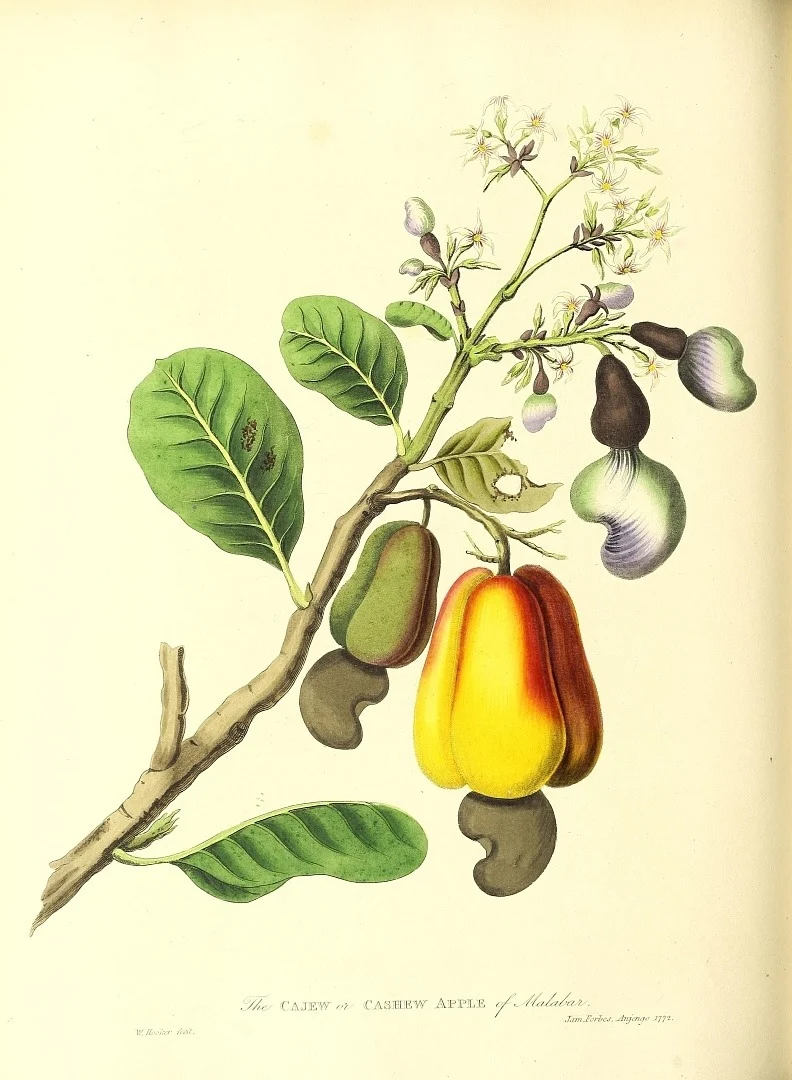
When people think about cashews, they usually think about the nutritious kernels enjoyed as snacks or ingredients in food products. However, the cashew tree offers much more than just nuts. Every part of the tree has potential value, supporting a more sustainable and circular agricultural economy.
One of the most valuable by-products of the cashew industry is Cashew Nut Shell Liquid (CNSL), a natural resin extracted from the honeycomb structure of the shell surrounding the kernel. CNSL is widely recognized in industrial manufacturing because of its excellent heat-resistant properties. Some industrial and manufacturing uses of CNSL:
- Used to make friction dust and components for automotive brake pads and clutch facings.
- Paints and Coatings: Serves as a base for water-resistant surface coatings, enamels, varnishes, and anti-corrosion metal primers.
- Resins and Polymers: Acts as a bio-based raw material to create laminating resins, foundry chemicals, and epoxy curing agents.
- Rubber Compounding: Added to rubber products to improve flexibility and act as a binder or extender. [1]
Specialty and emerging uses:
- Biopesticide and Biofertilizer: The utilization of deoiled CNSL oil cake was proven to have potential for being used as an organic fertilizer for vegetable crops. These studies implied the safety of an application of CNSL cake as fertilizer in leaf and vegetable. It has also been proved that CNSL acted as phytopesticide for the eradication of one of the serious pests on cotton plants. [2]
- Diesel Blends: Processed CNSL can be mixed with standard diesel (commonly in ratios like 20% CNSL to 80% diesel) to stretch fossil fuel supplies. [3]
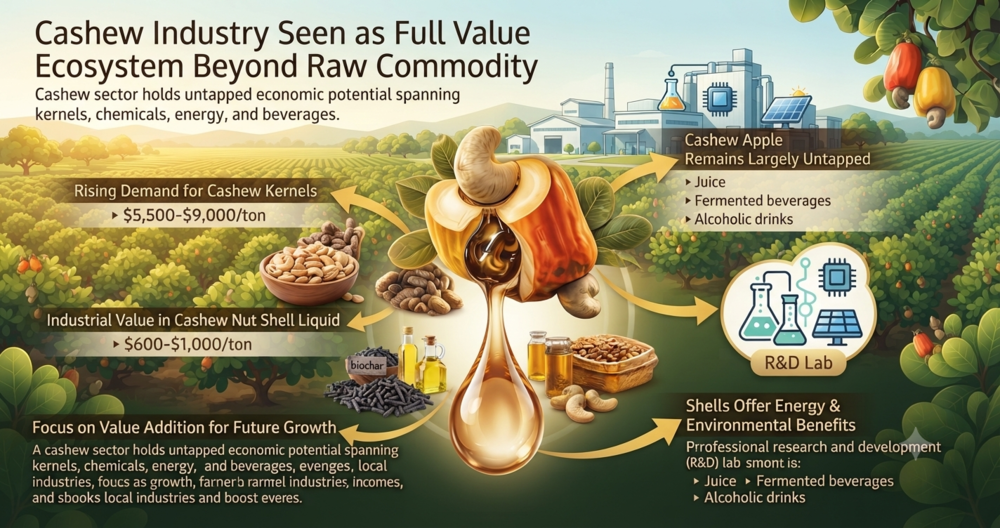
As cashew orchards age, trees may eventually be replaced to maintain productivity. Rather than being discarded, cashew tree timber can be put to practical use.
The wood provides good-quality firewood and can be converted into charcoal, creating an additional income stream for farming communities. In many rural areas, this biomass resource supports household energy needs and small-scale industries.
Similarly, cashew nut shells themselves contain significant calorific value. After processing, shells can be burned to generate heat for industrial operations or processing facilities. This allows cashew processors to utilize more of the harvested crop while reducing dependence on external fuel sources.
Young leaves can be harvested and consumed either fresh or cooked. In several tropical regions, tender cashew leaves are included in salads, vegetable dishes, and local culinary traditions. They are appreciated for their slightly tangy flavor and nutritional content.
Beyond their use as food, cashew leaves also serve as a supportive treatment for diabetes. Cashew leaves contain various bioactive compounds, including carbohydrates, tannins, saponins, alkaloids, and flavonoids, which contribute to their antimicrobial, antioxidant, and antidiabetic properties. Their antihyperglycemic effect is attributed to the improvement of pancreatic tissue function, primarily through enhanced insulin secretion and reduced intestinal glucose absorption. However, cashew leaves cannot completely cure diabetes. Nor will they help maintain stable blood sugar levels if you do not follow a proper diet. Therefore, to enhance the effectiveness of your treatment, you need to exercise and stick to a dietary regimen every day. [4]
The future of the cashew sector depends not only on producing high-quality kernels but also on maximizing the value of every part of the tree. CNSL supports industrial innovation, timber and shells provide renewable energy resources, and leaves offer additional food applications. This holistic approach is increasingly important as global buyers and consumers demand greater sustainability, transparency, and resource efficiency from agricultural supply chains.
As a trusted Organic Cashew Exporter Vietnam, Target Agriculture Group works closely with growers in Binh Phuoc to support responsible farming practices and long-term value creation throughout the cashew ecosystem. While premium organic kernels remain the core product, the broader potential of cashew tree by-products highlights why cashew cultivation continues to be a model for sustainable agriculture.
Reference
 YOUTUBE - LINKEDIN