


Many cashew buyers can find suppliers. Very few can guarantee consistent export quality shipment after shipment. Here is how Target Agriculture Vietnam controls quality from raw material sourcing to final inspection.
In global trade, not every batch of cashew nuts is suitable for export. Even minor issues such as improper moisture levels, contamination risks, excessive kernel breakage, or inconsistent grading can lead to shipment rejection.
For buyers in demanding markets like the EU and the US, product consistency and food safety compliance are essential. A shipment that fails to meet specifications may result in financial losses, delayed customs clearance, or damaged business relationships.
So, what allows certain cashew shipments to meet strict export requirements while others fail? The answer lies in a well-structured quality control system applied throughout the entire production chain—from raw material sourcing to final packaging. At Target Agriculture Vietnam, quality management is integrated into every stage of production to ensure stable quality and reliable export performance.
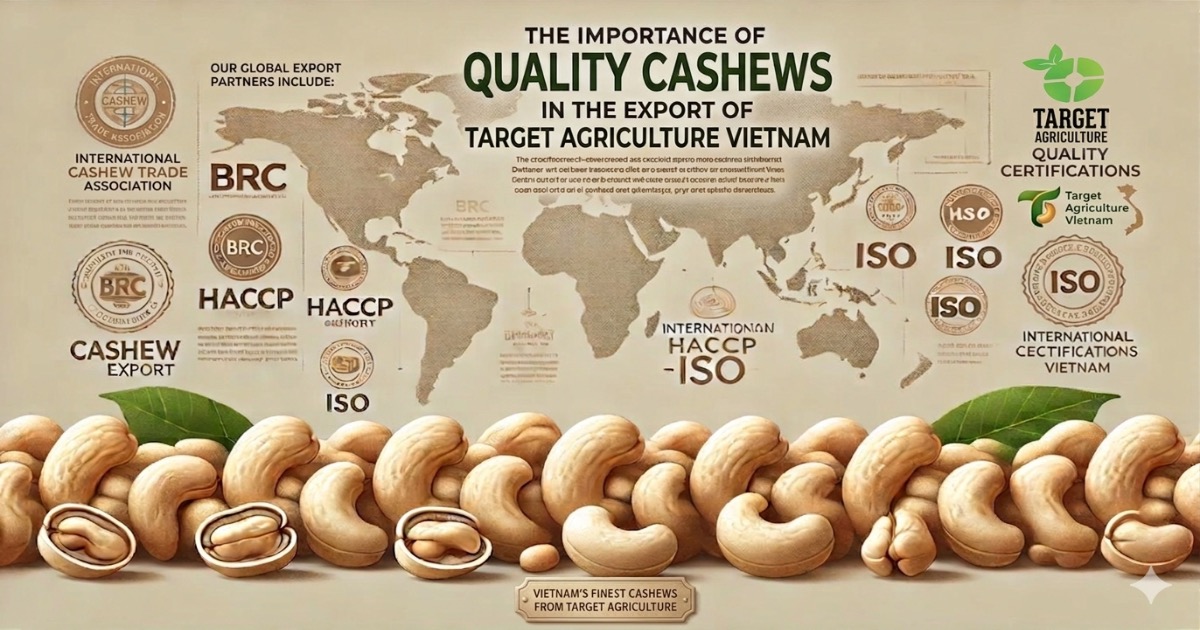
The quality of finished cashew kernels depends heavily on two critical factors:
- Raw material quality
- Processing consistency
Without proper control at these stages, exporters may face issues such as mold development, uneven kernel appearance, high defect rates, or unstable product quality across shipments.
To produce export-quality cashew kernels, processors must carefully control the quality of raw cashew nuts (RCN) by:
- Maintaining proper moisture levels to reduce mold and aflatoxin risks
- Selecting uniform nut sizes for stable processing performance
- Minimizing impurities and defective nuts
- Ensuring full traceability of sourcing regions
Careful raw material selection creates a more reliable production foundation and helps maintain consistency throughout processing.
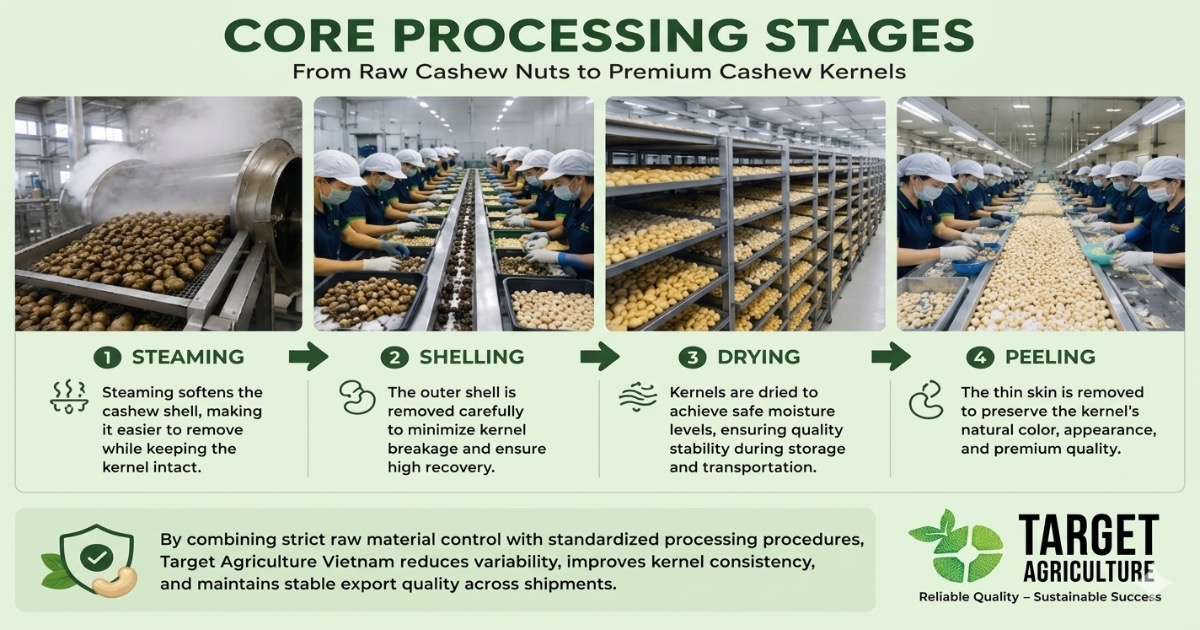
Once high-quality raw materials are secured, maintaining consistency during processing becomes equally important. Key stages include:
- Steaming for efficient shell removal
- Shelling to minimize kernel breakage
- Drying to achieve safe moisture levels for storage and transportation
- Peeling to preserve kernel appearance and color
By combining strict raw material control with standardized processing procedures, Target Agriculture Vietnam is able to reduce variability, improve kernel consistency, and maintain stable export quality across shipments.
>> See more 𝐖𝐡𝐚𝐭 𝐡𝐚𝐩𝐩𝐞𝐧𝐬 𝐢𝐧𝐬𝐢𝐝𝐞 𝐚 𝐜𝐚𝐬𝐡𝐞𝐰 𝐩𝐫𝐨𝐜𝐞𝐬𝐬𝐢𝐧𝐠 𝐟𝐚𝐜𝐭𝐨𝐫𝐲?
Before shipment, all cashew kernels must undergo a final quality inspection to verify compliance with international standards and buyer specifications. At Target Agriculture Vietnam, each batch is evaluated based on strict export criteria to ensure product reliability and regulatory compliance.
Key Inspection Criteria
Final inspections typically include:
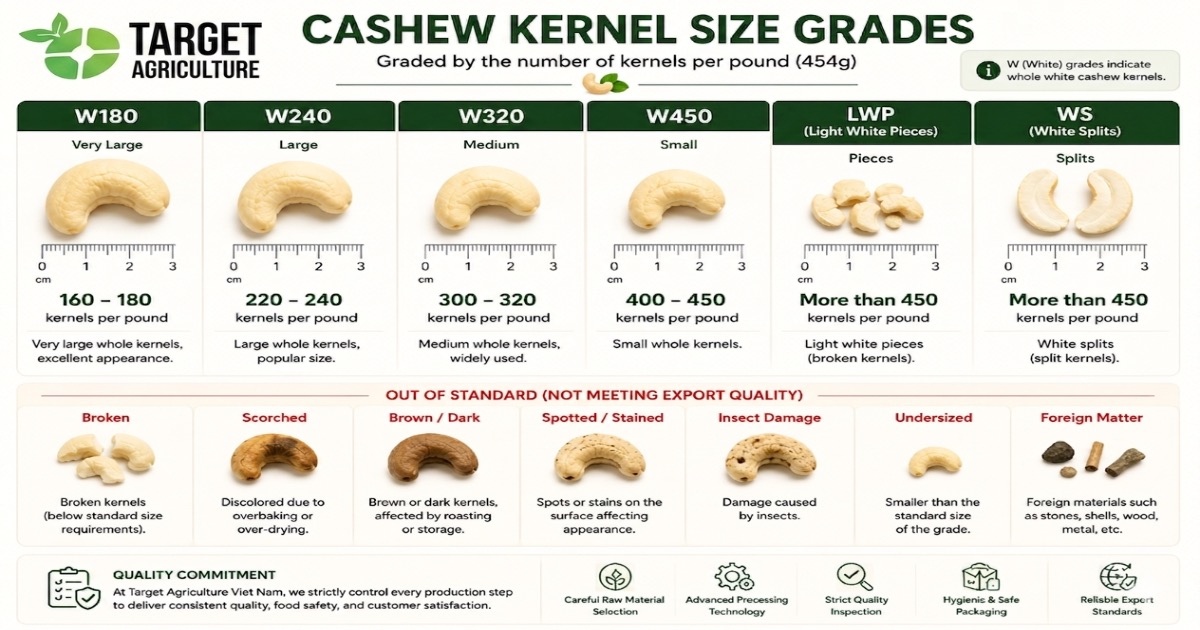
- Kernel grading (W180, W240, W320, etc.)
- Defect tolerance levels, including broken or scorched kernels
- Moisture content within acceptable export limits
- Packaging integrity, including vacuum sealing or nitrogen flushing
This process helps ensure that the final product meets both commercial requirements and food safety expectations in international markets.
For international buyers, quality is more than a technical specification—it directly impacts supply chain reliability and business performance.
- Consistency Across Shipments: Stable product quality helps buyers reduce variation between batches and maintain predictable product performance.
- Compliance with International Standards: Products that comply with EU and US food safety regulations typically experience smoother import procedures and lower compliance risks.
- Supplier Reliability: Reliable quality management strengthens long-term partnerships and improves buyer confidence in supply continuity.
- Faster Traceability & Risk Reduction: Strong traceability systems allow exporters to respond more efficiently to quality concerns and improve issue resolution when necessary.
Sustaining export-quality standards requires continuous improvement across people, processes, and technology. These factors help ensure that quality is not only achieved, but consistently maintained over time.
At Target Agriculture Vietnam, long-term quality management focuses on:
- Experienced QA/QC teams with technical expertise
- Standardized operating procedures aligned with international requirements
- Modern inspection and testing equipment
- Continuous monitoring and process improvement
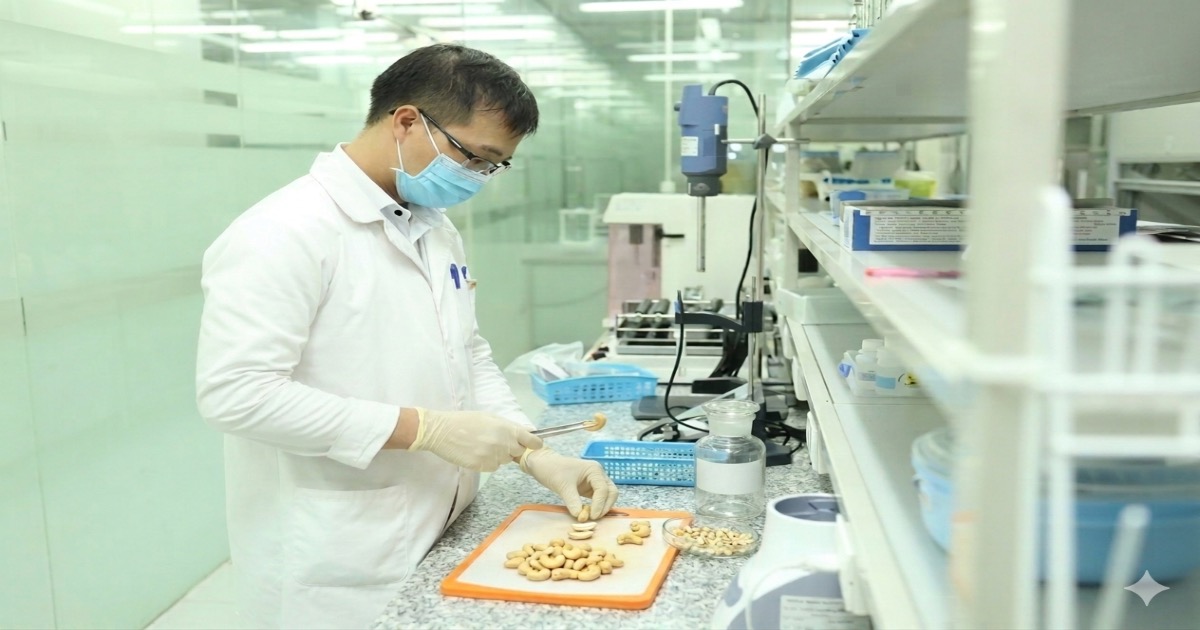
Meeting strict export standards is not a one-time effort—it requires a consistent and structured approach to quality management. At Target Agriculture Vietnam, quality control is embedded throughout the entire production process, ensuring that every shipment meets international expectations and delivers reliable value to global partners.
👉 In today’s competitive global market, one principle remains clear: Quality is not just about compliance—it is the foundation of trust, reliability, and long-term success in international trade.
 YOUTUBE - LINKEDIN